

Tower Crane Third-Party Inspection (TPI) in the UAE — Annual Certification, Load Testing & Documentation
TPI is not optional in the UAE — your operating permit dies the day the certificate expires. The working guide to annual third-party inspection: standards, load tests, defects and documentation.
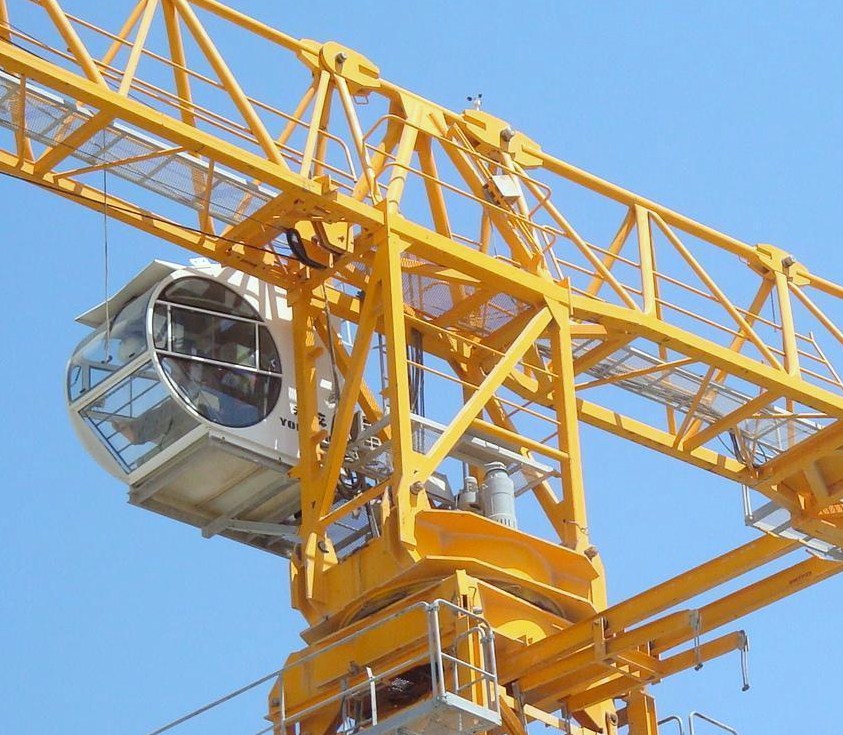
In the UAE, third-party inspection on a tower crane is not optional and it’s not negotiable. Your operating permit is suspended the day the TPI certificate expires — not the day a regulator audits the site, the day the certificate runs out. Most UAE permit suspensions across Dubai, Sharjah, Abu Dhabi and the free zones come from missed TPI dates, not from accidents.
This guide is the working playbook for tower crane TPI in the UAE — the standards referenced, the cadence the annual TPI sits on top of, the accredited bodies that issue certificates regulators accept, what the inspector actually checks, how the load test is staged, what to do when defects come back, and the documentation chain that has to live on site. It pairs with the broader UAE operations compliance guide and the permits guide covering Dubai Municipality, Trakhees, JAFZA and DAFZA.
The standards referenced on UAE sites
UAE specifications for tower-crane inspection lean on British and ISO standards rather than local equivalents — the regulators reference them by number in their guidance circulars and contractors quote them in tender documents.
- BS 7121-5 — Code of practice for safe use of cranes (tower cranes). The operating standard. Covers planning, erection, operation, dismantling.
- BS 7121-2-7 — Inspection, testing and examination of tower cranes. The actual TPI procedure standard.
- BS EN 14439 — Tower crane safety design standard. Referenced when assessing whether a crane meets design intent (out-of-service wind, structural envelope, brakes).
- ISO 4310 — Cranes test code and procedures. The load-test methodology.
- LOLER — UK Lifting Operations and Lifting Equipment Regulations. UK origin but widely cited in UAE specs and contract conditions.
The inspector references these by clause number in the report. Knowing which standard applies to which defect saves time when the rectification engineer reads the report.
The inspection cadence — daily, weekly, monthly, annual
The annual TPI is the headline. It sits on top of a layered inspection routine that the TPI inspector audits when they arrive — they check the operator’s daily log, weekly competent-person checks and monthly safety-device tests before opening their own clipboard. Gaps in the lower-cadence checks make the annual TPI harder.
| Cadence | Who does it | What’s covered |
|---|---|---|
| Daily | Crane operator | Visual checks before first lift — tyres on tower base if mobile, oil leaks, brake function, hook latch, wire-rope condition, limit-switch indicators, wind speed reading. Logged in operator daybook. |
| Weekly | Site competent person | Structural — bolts, tie-collars visual, climbing-cage status. Mechanical — gearbox oil levels, brake pad wear visual, slewing-ring grease. Electrical — control panel temperature, motor brushes, cable conditions. Logged on weekly checksheet. |
| Monthly | Site competent person + HOE technician | Anti-fall functional test (drop test on hoists, free-fall test on cranes per OEM procedure). Brake test under load. Limit-switch trip test — upper, lower, slew, trolley. Wind anemometer calibration check. |
| 6-monthly | Accredited body | Required for cranes/hoists lifting persons. Tower cranes rarely fall here; passenger hoists do. Reduced TPI with load test at 100% SWL. |
| 12-monthly | Accredited TPI body (Bureau Veritas, SGS, TUV, etc.) | Full structural / mechanical / electrical / safety-device inspection + 110% SWL load test. New certificate issued. The big one. |
For new installations and after any major repair (structural weld, replaced mast section, replaced slewing ring), an additional 125% SWL load test runs before the crane goes into service. That’s not part of the 12-monthly cycle — it’s an event-triggered TPI.
Accredited TPI bodies operating in the UAE
Any one of the bodies below will produce a certificate that Dubai Municipality, Trakhees, JAFZA, DAFZA, ADM and OSHAD accept. They’re internationally accredited, locally licensed, and have UAE-based inspector benches.
- Bureau Veritas — deepest UAE bench, ubiquitous on the major contractors’ jobsites, bilingual inspectors (English / Arabic).
- SGS UAE — close second, strong on standardized report formats and digital documentation.
- TUV Rheinland — strong on electrical and safety-device testing; preferred where the fleet includes European-spec cranes (Liebherr, Potain) with German technical heritage.
- TUV SUD and TUV Nord — both active in UAE, similar TUV-family approach.
- Lloyd’s Register — strong on structural, particularly in marine-adjacent projects (Mina Rashid, Palm Jebel Ali waterfronts).
- DNV — selective UAE presence, well-respected for structural fatigue assessments.
- Applus Velosi — strong on safety-management integration, often paired with the operator-training side of the business.
- Intertek — solid mid-tier option, often used on industrial / oil-and-gas adjacent sites.
How to pick: most multi-crane contractors pick one body and stay with them across the fleet so the inspector continuity is real. An inspector who knows your site knows what was wrong last year, what was fixed, and what to look at this year. That’s worth more than the small price difference between bodies. HOE arranges booking with whichever body the client prefers and has the rectification crew on standby.
What the TPI actually covers
The inspector walks the crane methodically — there’s no “drone fly-around and a paperwork sign-off” version of this. Expect 4–6 hours on the crane plus 2–4 hours of paperwork. On a tied-in high-rise crane, expect them to climb every tie-in level.
Structural — mast section weld inspection (visual, dye-penetrant on suspect welds, ultrasonic if cracking suspected); jib and counter-jib welds; bolt torque on critical joints (mast-to-base, tie-collar, slewing platform); anchor frame and concrete base; tie- collar brackets and gap to building. The L68B grade guide covers what mast grade should sit where — TPI checks it matches the load chart in use.
Mechanical — slewing-ring clearance and bolt torque; trolley assembly; hoist motor, gearbox and brake; counter-jib pulleys and counterweight wire ropes.
Electrical — control panel (heat, insulation resistance, contactors, earth); motor winding insulation (megger), brush wear, terminals; cabling for chafing and glanding; all limit switches tripped and verified.
Safety devices — anti-fall device (date of manufacture vs 3-year life, drop / free- fall test per OEM); overload limit indicator with calibrated load; anti-two-block on auxiliary hooks; wind anemometer calibration; anti-collision on multi-crane sites.
Load test — discussed next.
Load testing in detail
Two test levels apply: 110% SWL for the routine annual TPI, 125% SWL for new installations and after any major structural repair. The test is staged and signed by the TPI inspector; the crane goes off lift programme for 4–8 hours total.
Setup (1–2 hours): crane positioned over a certified laydown area; test load assembled from certified concrete blocks, water bags or steel plates, weight verified on a load cell at the hook; banksman and operator briefed; exclusion zone marked; anemometer reading logged — the test halts if wind rises above 10 m/s (see Shamal storm guide for UAE wind protocols).
Test sequence (2–3 hours): lift at minimum radius, hold 10 minutes, observe; slew 180° with load; travel to mid radius and hold; travel to max radius (usually a smaller load because SWL reduces with radius per load chart) and hold; lower under brake and time the brake; lift again, kill power mid-lift, the brake should arrest the load with no creep.
Documentation (1–2 hours): load-test record completed with radii, weights, hold times and observations; inspector signs. Any defects observed during the test are added to the inspection report. For a 125% proof test, the same sequence runs with the higher load and extra structural observation; the inspector then signs the commissioning certificate that lets the crane enter service.
Defect classification and rectification
TPI reports classify defects into three tiers. The classification determines what the crane can do until the defect is fixed.
| Category | Severity | Rectification window | Status during rectification |
|---|---|---|---|
| Category A | Immediate safety risk | Fix before next lift | Crane stopped — locked out of service until rectified and re-verified. |
| Category B | Significant defect | 30 days | Crane operational under restricted conditions if specified; otherwise normal use with logged action. |
| Category C | Minor defect | 90 days | Normal use; logged for routine maintenance. |
A clean TPI is rare — most cranes come back with a handful of Category C items (filter change, paint touch-up, minor cable re-routing) and the occasional Category B. Category A is the one that hurts: the crane is locked, the site programme stalls, and the rectification clock starts the moment the lockout is signed. Common Category A triggers in the UAE: anti-fall device past 3-year service life; visible weld cracking on a mast section or jib chord; brake failing to hold under load; tie-collar bolt elongation past spec; anchor-frame movement.
For each of these, rectification is parts plus labour. HOE Dubai depot stocks the high- frequency items — anti-fall devices, brakes, tie-collar bolts, common mast sections, limit switches — for same-day swap-out. See the spare parts procurement guide for the broader inventory and lead times. The 24/7 breakdown line +971 50 641 5819 is the right number when a TPI just failed and the crane is locked.
The documentation pack
Three documents form the TPI pack. All three must be on site, in the crane operator’s logbook or the site safety file, available to any regulator inspector who turns up.
- TPI certificate — one page, signed and stamped by the accredited body. Certificate number, issue and expiry date (12 months from issue), crane make / model / serial, SWL, inspector’s licence number. The document the regulator checks first.
- Inspection report — 8–20 pages, structured per BS 7121-2-7. Structural, mechanical, electrical, safety devices and load test sections. Includes photographs, defect list with categories, rectification status, recommendations.
- Load-test record — certified weights used, radii tested, hold times, observed deflection, brake-holding times, ambient wind and temperature. Signed by inspector.
A second copy lives with the project HSE manager. A third stays with the operating company (HOE for cranes under our maintenance contract). The Dubai Municipality circular on lifting appliances is explicit that documents must be available on demand — verbal “we have it in the office” is not acceptable.
Common UAE failure modes — spot them before the inspector does
After several hundred TPIs across HOE-maintained cranes, the same defects show up repeatedly. Catching them on the monthly competent-person check saves the rectification clock.
- Anti-fall device aged past 3-year service life — check the date stamp every month. 36 months from manufacture, swap it. Non-negotiable.
- Tie-collar bolt elongation — measure bolt length quarterly; replacement is cheap, failure is not.
- Mast section weld cracking from cyclic loading — dye-penetrant test high-stress welds at every 6-monthly competent-person check, before the TPI ultrasonic finds them.
- Motor brush wear — measure quarterly; replace at 70% of original length.
- Wire-rope wear on counterweight cables — visual broken-strand count weekly.
- Brake disc wear — measure thickness monthly against OEM minimum.
- Limit-switch drift — function-test monthly; recalibrate before they trip wrong.
A good preventive-maintenance contract catches every one of these. A bad one finds them at TPI when the rectification clock has already started.
The cost stack
Budget annual TPI properly and there are no surprises.
- TPI fee: AED 6,000–15,000 per crane.
- Downtime during load test: 4–8 hours off lift programme — at AED 5,000–12,000 per day of crane downtime, AED 2,500–4,000 of opportunity cost.
- Dummy load rental (if not site-available): AED 1,500–4,000.
- Rectification budget: plan AED 5,000–25,000 contingency for Category B/C; Category A is event-driven and can run higher if a structural part is involved.
Total realistic annual cost per crane: AED 12,000–40,000 including TPI, load test, expected minor rectification and downtime. Cranes on a planned preventive cycle trend toward the lower end; reactively-run cranes trend toward the upper end with occasional spikes when a Category A defect surprises the operator.
How HOE’s preventive maintenance keeps clients clean through TPI
The pattern across cranes HOE maintains under contract: defects show up on the monthly competent-person check and get rectified before the annual TPI. By the time the inspector arrives, the report comes back with a short Category C list and a clean load test. The reason it works is inventory and crew — high-frequency rectification parts are already in the Dubai depot, and the maintenance crew has worked on the crane every month for 12 months and knows what’s drifting.
The operator licensing guide covers the other side of the equation: an inspected crane is only safe in the hands of a licensed operator, and the TPI inspector will ask to see the operator’s certificate.
Getting started
HOE coordinates annual TPI with the accredited body of your choice, manages the load-test logistics, and handles any rectification work — structural, mechanical, electrical or safety-device — from the Dubai depot.
For sites in Dubai (DM), Trakhees territories, JAFZA, DAFZA, Sharjah, the Northern Emirates and Abu Dhabi (ADM / OSHAD), we book the TPI 4–6 weeks ahead of expiry so the certificate renews seamlessly. For cranes that have just failed TPI and are locked out of service, the 24/7 breakdown line gets a rectification crew on the trailer within hours.
- Sales / planned TPI booking: +971 50 144 4810
- 24/7 breakdown / urgent rectification: +971 50 641 5819
- Email:
inquiry1@hoe.ae - Contact form: contact page →
The services overview covers the full maintenance-and-inspection package, and the spare parts hub lists the rectification inventory held in Dubai. The FAQs below cover specific TPI questions — body selection, cost, idle-crane re- inspection, anti-fall service life, document retention.
People Also Ask
Frequently Asked
Which TPI body should I use for a tower crane in the UAE?
What does a typical annual TPI cost in the UAE?
Can the same TPI body inspect the tower crane and the construction hoists on the same site?
What load test percentage applies, and how is it staged?
What happens if the crane fails the TPI — how long does re-inspection take?
Do I need TPI for a crane that's been idle for three months or more?
What's the service life of the anti-fall safety device, and when must it be replaced?
What documents must I keep on site for the TPI to be valid?
Need this on a real site?