

Tower Crane Wind Speed Limits & Shamal Storm Procedures in the UAE
Wind has caused more structural damage to UAE tower cranes than any other operational factor. The threshold table, the weathervane stow drill, and what's actually gone wrong on recent Dubai sites.
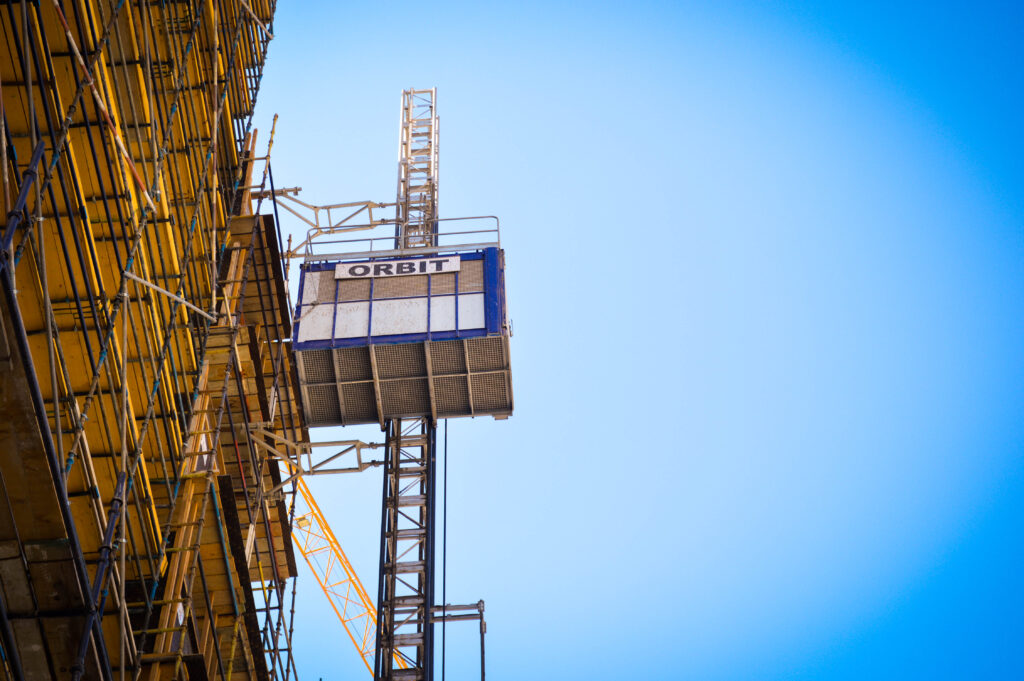
Wind has caused more structural damage to tower cranes in the UAE than any other operational factor — more than overload, more than collision, more than maintenance shortcuts. Every March through August, the shamal season delivers a procession of NW gusts that will move any jib that hasn’t been stowed correctly. Cranes that were left set up for the morning lift, with slew brakes still engaged, have torn at the slewing platform. Cranes mid-climb when a faster-than-forecast front arrived have been abandoned at altitude for hours.
The good news is that the operating envelope for tower cranes in the UAE is well- defined, the stow drill is short, and a correctly stowed crane will ride out any normal shamal storm without damage. The bad news is that the steps are not always intuitive — and the most important one (releasing the slew brakes during stow) is also the one most often missed.
This guide covers the three wind thresholds every UAE site needs to internalise, how the shamal forecasting decision actually gets made, the weathervane stow drill step by step, and what’s gone wrong on recent Dubai sites when those steps weren’t followed.
The three wind thresholds
Every tower crane in the UAE has three wind speeds that matter — printed in the OEM manual, calibrated into the jib-tip anemometer alarm, and built into the site SHE plan. They are not the same number, and confusing them is a frequent source of incidents.
| Threshold | Typical value | What happens | Source |
|---|---|---|---|
| In-service operating limit | 0–20 m/s (0–72 km/h) sustained, gust-dependent | Normal lifting permitted | OEM (varies: YONGMAO STT293 ~20 m/s; POTAIN MCT-series ~22 m/s) |
| Stop-work threshold | 20 m/s gust or 35 km/h sustained at hook | Cease lifting, set load down, begin stow drill | Dubai Municipality circular DM-PH&SD-P4-TG21 |
| Storm survival (out-of-service) | ~36 m/s (~130 km/h) at jib tip | Crane stowed in weathervane mode, no personnel on or near crane | EN 14439 design standard |
A few important nuances:
- The in-service limit is OEM-specific. Read the manual for your actual crane; don’t rely on rules of thumb. The anemometer alarm is set to this number by the commissioning engineer.
- The stop-work threshold trips on gusts, not sustained wind. UAE shamals are gust-heavy — a 15 m/s sustained background commonly delivers 25 m/s gusts.
- The storm survival number assumes the crane is stowed correctly. A crane in partial stow (slew brake engaged, trolley out) is structurally a different animal and will not survive design-storm winds.
Personnel hoists and any lift involving passengers stop earlier than goods-lifting cranes — typically at 15 m/s. See our construction hoists UAE buyer’s guide for the hoist-specific limits and tie-in considerations.
How wind speed is measured on a tower crane
Every modern tower crane installed in the UAE carries an anemometer at the jib tip — the highest, most wind-exposed point on the crane. It feeds the cab display and triggers an audible alarm at the OEM-set threshold.
Practical checks UAE site teams should make:
- The alarm threshold is configurable and is sometimes left at a factory default that doesn’t match the actual crane on site. Verify at commissioning.
- Annual calibration is required. Sand abrasion and bearing wear drift readings low over time. TPI bodies check function during the annual inspection (see our TPI annual certification guide); proper calibration is a separate exercise.
- Gust vs sustained. Modern units display both peak gust and 10-minute rolling average. For stop-work decisions, use the gust reading.
- Site reference anemometer. A second anemometer at ground level gives the SHE team an independent reference and a record for the daily log.
Shamal storms — what they are, when they hit
“Shamal” is Arabic for “north.” In UAE meteorology it refers to a persistent NW wind driven by the pressure gradient between a Mediterranean low and the Arabian high — the dominant pattern from March through August.
Site-level reality:
- Direction: dominant NW, occasionally veering N or W. On coastal Dubai and Abu Dhabi sites, you can count on it.
- Season: March–August, strongest events typically May–July.
- Speed: sustained 30–60 km/h is routine; major events deliver gusts of 60–90+ km/h. A 25 m/s peak gust is not unusual at altitude.
- Duration: 6 hours (frontal passage) to 3 days (established gradient).
- Dust: shamals frequently lift surface dust producing the Gulf “yellow sky” haboob conditions. Wind is hazardous to structures; dust is independently hazardous to visibility and machinery.
A separate khareef influence — SW monsoon air affecting the southern UAE and Oman June through September — brings lower peak winds but sustained humidity that compounds corrosion risk on exposed electrical equipment.
The forecasting decision protocol
A well-run UAE site doesn’t wait for the anemometer to read 20 m/s before deciding to stow. The decision is made hours ahead against a forecast.
24–48 hours ahead. SHE manager monitors NCM forecasts. If a shamal warning issues, the next-day plan is reviewed — high-risk lifts (long radius, near-max load, personnel) are pushed.
12 hours ahead. Forecast is refined. If predicted peak is below the OEM limit by 5+ m/s, lifting continues. If close to or above, stow is scheduled and operators briefed.
6 hours ahead. Stow plan is locked. Loose items secured, climbing equipment locked off, anti-collision system armed on multi-crane sites.
1 hour ahead. Final check. Operator out of cab, lockout/tagout applied, slew brakes confirmed released, weathervane mode verified.
The cadence becomes routine in shamal season — and it’s the difference between an organised stow and an emergency scramble.
The stow drill — step by step
The standard tower crane storm-survival configuration is called weathervane mode. Every operator and every site supervisor should be able to recite it from memory.
- Trolley pulled fully inboard. The trolley sits at the minimum-radius position against the slewing platform. This minimises the wind moment on the jib and prevents the trolley from running away under wind load.
- Hook raised to the upper limit. The hook is brought up to the maximum height, well above any obstacle the swinging jib could foul.
- Slew brakes released. This is the critical, counterintuitive step. The jib must be free to rotate downwind. With the brake engaged, the wind drives the jib and counter-jib through a fixed pivot — the slewing platform sees the full moment, and EN 14439’s 36 m/s survival assumption no longer holds.
- Operator out of cab. Crane is powered down. No personnel on or near the structure for the duration of the storm.
- Lockout / tagout. Main isolator off and tagged. Cab door locked.
- All loose items secured or removed. Chains, slings, spreaders, lifting accessories — anything that could be picked up by wind is either pulled off the crane or lashed firmly.
- Anti-collision system armed. On a multi-crane site, the anti-collision system stays armed during stow so jibs can rotate downwind without colliding. Check that adjacent cranes have overlap-permission set up correctly for weathervane mode.
The drill takes 15–30 minutes for an experienced crew. Practice it during non-storm conditions so that when the call comes at 0500 ahead of a forecast shamal, the team isn’t reading the manual for the first time.
Climbing windows — the most exposed condition
A tower crane is at its most structurally vulnerable during a climb — when the climbing cage is engaged, a mast section is being added, and the load path is temporarily different from the operating configuration. Wind tolerance during climbing is significantly lower than during normal operation.
The rule of thumb:
- Climb operations are scheduled only when the forecast shows sustained wind below 15 m/s for the full duration of the climb — typically 4–8 hours including bolt-up.
- The wind forecast is checked at the start of every climb, with a planned abort point if conditions deteriorate.
- If wind builds mid-climb, the climb is stopped at the current height, the mast is secured in its intermediate configuration, and the work resumes in the next clear window — even if that means waiting two days.
- Internal-climbing operations have similar limits but with extra slab-edge exposure considerations. See our internal vs external climbing guide.
The 15 m/s climb limit is tighter than the 20 m/s operating limit for good reason — during climb the crane is partially disassembled, with the climbing cage carrying loads the static mast was never designed to carry alone. Don’t be tempted to push it.
Lessons from recent UAE wind events
Three patterns from the last two shamal seasons. No names attached, but if you’ve worked on a Dubai site through 2024–2026, you’ll recognise at least one.
Slew brake left engaged. A mid-rise site in Dubai South didn’t complete the stow drill before a May shamal arrived faster than forecast. Trolley was in, hook was up — but the slew brake had been left engaged when the operator stepped out. Peak gust was around 28 m/s, well below the EN 14439 survival number for that crane. The jib tore at the slewing ring weldment. Write-off of jib and slewing platform; six weeks of breakdown response and replacement.
Mid-climb on a marginal forecast. A coastal Abu Dhabi site started a climb at 0600 with a forecast peak of 14 m/s. By 1000 the forecast had revised upward; by 1100 gusts were at 18 m/s. Crew aborted, secured the mast partially, came down. No structural damage, but the unfinished climb left the site without a full operating hook for 36 hours and delayed concrete pour sequencing.
Loose slings. A JLT site had a perfect stow drill on the crane — weathervane mode, slew released, everything right. What they didn’t secure were spreader bars and chains stored on the counter-jib deck. A 70 km/h overnight gust threw a spreader bar off the crane onto a hoarding fence 40 m away. No injury, but a regulator visit and a project shutdown until securing protocols were revised.
Common thread: in every case the crane was designed to survive the event. The failure was procedural.
Dust — a separate hazard
Dust travels with many shamals but is a structurally separate problem.
- Visibility-related stop. Even if wind is in-service, if the operator can’t see the load and landing zone, the lift must stop. Dust events drop visibility below 100 m within minutes.
- Electrical ingress. Fine UAE dust penetrates seals European-spec equipment was never tested against. Cabinets, slewing motors and brake assemblies need IP65+ rating, and seals need annual replacement during the TPI cycle.
- Anemometer fouling. Dust biases cup-anemometer readings low. Pulse the unit manually during dust events; if it reads suspiciously low against feel, escalate.
- Post-event cleanup. Flush exposed gearing, inspect brake friction surfaces for sand contamination, dry any panels with ingress. Not optional.
Construction hoists — different limits
The hoist story is shorter but not less important:
- Lower in-service limit: personnel hoists stop at 15 m/s, not 20 m/s.
- Tie-in spacing matters more. A well-tied hoist mast rides out wind events; one with stretched spacing is much more exposed. The principles in our tie-ins and free-standing height guide translate to hoists with proportional spacing.
- Anti-fall device sensitivity. SAJ-series anti-fall devices are wind- sensitive — high-wind vibration can pre-trip the device. Check sensitivity settings against manufacturer spec annually.
- Stow cabin at ground level, not at altitude — opposite of the tower crane hook.
How HOE applies this on site
Dubai Municipality circular DM-PH&SD-P4-TG21 is the foundational regulator document; Trakhees publishes broadly aligned guidance for sites inside its territories (Jebel Ali, Mina Rashid, Nakheel-managed waterfronts). Abu Dhabi sites work under OSHAD and ADM equivalents.
HOE’s role is twofold:
- At commissioning: verify the jib-tip anemometer is calibrated to the OEM threshold, brief the operator and SHE team on the model-specific stow drill, and supply the storm-mode reaction-force envelope to the project structural engineer (see our foundation design guide for how those numbers translate into pad design).
- During the season: 24/7 breakdown response on +971 50 641 5819 for storm damage. Engineers typically on-trailer within 4–8 hours UAE-wide; for shamal incidents the response is usually slewing platform, jib root, or climbing rig.
Common mistakes
Five recurring errors HOE engineers see on UAE sites:
- Treating sustained wind as the only number. Gusts kill cranes. Watch the gust reading; if your anemometer doesn’t display it, replace it.
- Leaving the slew brake engaged during stow. The single most common cause of structural damage during shamal events.
- Treating dust events as “just wind.” Dust has its own visibility, ingress and instrument-fouling risks.
- Mid-shift climbing on a marginal forecast. Climbing is the most exposed condition in the crane’s life. Don’t gamble on a 14 m/s forecast holding.
- Loose items during stow. Spreaders, slings, tools — anything that could be picked up needs to come off or be lashed firmly.
For the wider regulatory frame — operator licensing, TPI cycles, permit pathways — see our UAE tower crane operations and compliance guide; the load chart fundamentals piece covers how wind interacts with rated capacity at different radii, and the L-series mast sizing guide covers the masts most UAE shamal incidents have involved.
When the storm has already done damage
If a shamal has caught your site and you’re looking at a torn slewing ring or a stuck climbing rig: HOE’s breakdown team handles structural damage assessment, emergency stow, replacement-part mobilisation and full repair. Call the 24/7 breakdown line on +971 50 641 5819 or open a structured enquiry through our contact page. For pre-season planning and SOP review the sales team is on +971 50 144 4810 or via services.
Get the stow drill right and the worst UAE wind events become a 24-hour inconvenience. Get it wrong and they become a six-week project delay. The difference is twenty minutes of procedure and one released brake.
People Also Ask
Frequently Asked
What's the working wind limit for a UAE tower crane?
When should I stop operations during a shamal?
Why is the slew brake released during stow (not engaged)?
What's the out-of-service / storm survival wind speed?
Where do UAE sites get their wind forecasts?
What about dust storms separately from wind?
Should I treat operating gusts the same as sustained wind?
Need this on a real site?