

Tower Crane Permits in Dubai — Municipality, Trakhees, JAFZA & DAFZA Approval Roadmap
Most UAE tower-crane permit problems aren't about paperwork — they're about which authority actually owns the zone. A working roadmap across DM, Trakhees, JAFZA, DAFZA, Abu Dhabi and airspace NOCs.
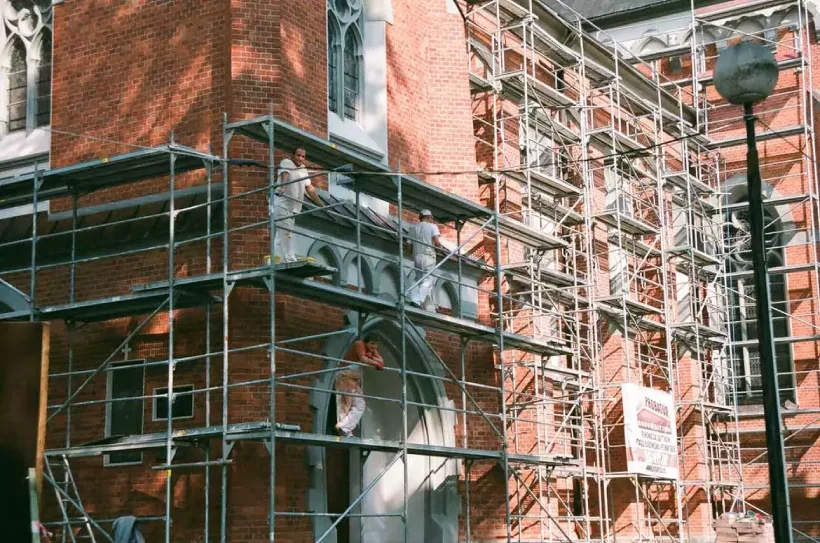
Most UAE tower-crane permit problems aren’t about paperwork — they’re about authority confusion. Stand at a point in central Dubai and look 5 km in any direction: within that circle sit projects governed by Dubai Municipality, Trakhees, JAFZA, DAFZA and in some cases a master developer’s own engineering review on top. Four to five different permitting bodies, each with their own portals, fee structures and competent-persons registers, regulating equipment that is otherwise identical from one site to the next.
The cost of getting this wrong is a finished foundation pad, a crane on a trailer at the gate, and a permit sitting in the wrong authority’s inbox. We’ve seen 3-week delays from a single mis-routed pack — delays that propagate through the structural programme, hoist install timing and the handover schedule downstream.
This guide is the working roadmap: which authority owns which zone, what the standard documentation pack looks like, how long each authority actually takes in 2026, when airspace clearance applies, and the rejection patterns to design out of your submission.
The zone-by-zone reality
The UAE doesn’t operate a single national lifting-equipment permit. Each emirate has its own municipal authority, and inside Dubai especially there are sub-jurisdictions with their own engineering departments, fee structures and approval calendars. The first question on any project isn’t what documents do we submit? It’s who is the issuing authority for this exact plot?
Dubai Municipality (DM) territory
DM’s Health & Safety Department is the default authority for private Dubai construction sites that don’t sit inside a free zone or a Trakhees-managed master community. Its reference document is DM-PH&SD-P4-TG21 — Guidelines for Examination and Certification of Cranes, Hoists, Lifts and Other Lifting Appliances — the circular that every competent person working on Dubai cranes should have on their desk.
Typical DM zones: Downtown Dubai, Business Bay, Al Quoz, most of JLT, large parts of Marina (some Nakheel oversight on adjacent waterfronts), Jumeirah, Al Barsha, Dubai Hills and most inland districts.
Trakhees territory
Trakhees is a sub-arm of PCFC — Ports, Customs & Free Zone Corporation — and regulates territory PCFC and Nakheel administer directly. Trakhees-CED (Civil Engineering Department) is the specific desk that handles crane permits.
Typical Trakhees territory: Jebel Ali residential (not the free zone — that’s JAFZA), Discovery Gardens, IMPZ, Mina Rashid, Dragon Mart, and Nakheel-managed waterfronts. Several Palm Jumeirah, Palm Jebel Ali and Deira Islands plots also sit under Trakhees rather than DM.
Trakhees runs a separate submission portal and a different fee structure. Document content is similar to a DM pack but formatting, the named competent-persons register and the fee schedule are not interchangeable.
JAFZA territory
JAFZA — Jebel Ali Free Zone Authority — administers the industrial and logistics free zone adjacent to Jebel Ali Port. Inside the JAFZA boundary, JAFZA’s own engineering approvals office issues crane permits. The pack mirrors Trakhees in structure but is filed inside JAFZA’s portal and tends to clear faster because the volume is lower.
DAFZA territory
DAFZA — Dubai Airport Free Zone Authority — covers the free zone adjacent to Dubai International Airport (DXB). Two differences versus JAFZA: the engineering office is smaller, and almost every crane on a DAFZA site needs an airspace NOC because of proximity to active runways. DAFZA coordinates with DCA on airspace clearance as part of its internal workflow.
Master-developer enclaves
Layered on top of all of the above, several master developers — Emaar, Nakheel, Dubai Properties, Meraas, Dubai South — operate their own engineering review on plots inside their master communities. The municipal or Trakhees permit clears the regulatory layer; the developer’s review clears the contractual layer. On a Downtown Dubai plot, that means clearing both DM and Emaar engineering before lifting approval. Treat the developer review as a parallel-track requirement, not a sequential one.
Authority → zone → typical lead time
| Authority | Typical zones | Indicative lead time |
|---|---|---|
| Dubai Municipality (DM) | Downtown, Business Bay, Al Quoz, Marina (most), JLT (most), inland Dubai | 5–15 working days |
| Trakhees-CED | Jebel Ali residential, Discovery Gardens, IMPZ, Mina Rashid, Dragon Mart, Nakheel waterfronts | 10–21 working days |
| JAFZA | Jebel Ali Free Zone | 7–14 working days |
| DAFZA | Dubai Airport Free Zone | 7–14 working days (longer if airspace NOC required) |
| Abu Dhabi Municipality / DMT | Abu Dhabi mainland, Yas, Saadiyat, Reem | 10–21 working days |
| Sharjah, RAK, Ajman, Fujairah municipalities | Respective emirates | 5–14 working days (varies) |
| GCAA / DCA / ADAC airspace NOC | Anywhere near controlled airspace | 7–14 working days |
Lead times above are indicative for a clean, complete submission. Bouncebacks reset the clock.
Dubai Municipality — the standard permit process
DM is the most common authority on Dubai private construction sites and the model the others follow with variations. Walking through the DM process:
Pre-erection submission. Filed before the crane lifts from the trailer at the gate. Includes the technical pack plus the contractor’s project-specific HSE plan addendum.
Structural sign-off. The project structural engineer stamps the crane pad design against the OEM-supplied reaction-force envelope, cross-referenced to the geotech report for the plot. The geotech reference is critical; DM checks the pad sits on a soil-mechanics basis, not a generic assumption. For specifics see our foundation design guide.
Operator credentials. Operator and rigger licenses with expiry dates that clear the projected lift-start date by a sensible margin. DM date-checks at submission, not at lift, so a license expiring inside the permit cycle triggers a reject. See the operator licensing guide.
TPI certificate. From an accredited body — Bureau Veritas, SGS, TUV, Lloyd’s Register, Applus Velosi, Intertek and similar. New installations: 125% SWL load test; re-deployed cranes: most recent periodic inspection at 110% SWL. See the TPI inspection guide.
HSE plan addendum. Crane-specific section — exclusion zones, loading procedures, wind-stop SOP, weathervane procedure, emergency response, banksman protocols.
Insurance. General site liability isn’t enough. DM requires an endorsement naming the specific crane model and SWL.
A complete pack clears DM in 5–15 working days. The variability is almost entirely about completeness: clean submissions move fast, anything missing bounces back and loses 5–10 days.
Trakhees specifics
Trakhees-CED runs a structurally similar process to DM with a few important differences:
- Separate submission portal — DM-format packs don’t transfer without reformatting. Cover sheets, form numbers and the named-competent-person register all differ.
- Different fee structure — fees vary by configuration and project value, published on the Trakhees portal. Confirm with the issuing desk.
- Slightly longer lead times — 10–21 working days, partly because Trakhees-CED’s structural reviewers run their own check rather than relying exclusively on the project engineer’s stamp.
- Tighter master-community coordination — on Nakheel master communities, a Trakhees clearance doesn’t automatically satisfy the Nakheel engineering review.
JAFZA and DAFZA — the free-zone path
Both free-zone authorities run their own engineering approvals offices and are typically faster than DM or Trakhees.
JAFZA processes most crane permits inside 7–14 working days. Most JAFZA cranes are mid-capacity hammerheads on warehouse and factory builds rather than high-rise — documentation focus shifts toward radius and load-chart compliance within the free-zone road network.
DAFZA processes in a similar 7–14 working day window but airspace NOC is an almost universal additional requirement because DAFZA’s footprint sits inside DXB’s obstacle limitation surfaces. Kick off the airspace application in parallel with the DAFZA pack — sequencing them wastes a week.
Abu Dhabi — what changes
Abu Dhabi operates under a different regulatory umbrella. Abu Dhabi Municipality (ADM) and DMT — Department of Municipalities & Transport administer construction permits, but lifting equipment also intersects with OSHAD — Occupational Safety & Health Abu Dhabi, which sets workplace safety requirements the crane operation must demonstrate against.
Moving a crane from Dubai to Abu Dhabi in practice:
- Technical pack content is largely transferable — lift plan, foundation calc, TPI, insurance, operator credentials. Formatting and competent-persons register differ.
- OSHAD adds requirements around safety officer qualifications and HSE plan depth on lifting. Larger Abu Dhabi sites often add a dedicated lifting supervisor on top of rigger/banksman.
- Lead times: 10–21 working days, similar to Trakhees.
- ADAC — Abu Dhabi Aviation Centre — issues airspace NOCs for cranes near AUH.
Within Abu Dhabi the zone reality varies by island — Yas, Saadiyat, Reem and Hudayriyat all sit under the ADM/DMT umbrella, but master developers (Aldar, Modon, Imkan) layer their own engineering review on top.
Airspace approval — when, who, how long
Airspace clearance applies any time the crane’s maximum vertical height penetrates a defined obstacle limitation surface around a controlled airport. Working rules:
- Any crane reaching more than 150 m AGL within roughly 15 km of an active runway — start the airspace application as soon as the configuration is finalised. Most Dubai high-rise cranes downtown, in Marina, Business Bay and around Dubai Hills sit inside this envelope.
- Anywhere inside DAFZA, near the DWC approach corridor in Dubai South, or within ~10 km of AUH — assume an NOC is required regardless of height.
Issuers: GCAA (federal) issues the underlying obstacle clearance authorisation; DCA covers Dubai sites near DXB, DWC and SHJ approach paths; ADAC covers Abu Dhabi sites near AUH.
Lead times: 7–14 working days. The NOC is configuration-specific (mast height + jib length at a specific plot) so reconfiguring after the NOC generally requires a fresh application. Recent examples needing NOC: Burj Azizi-adjacent work near DXB, any Marina or JBR crane above ~130 m, much of Dubai Hills phase 3, and most Dubai South Expo legacy plots.
The standard documentation pack
Across all UAE authorities the technical pack lands on roughly the same checklist. Adapt the formatting per authority; the content is consistent.
- Lift plan signed by a competent person registered with the issuing authority
- Operator licenses + rigger licenses with valid expiry dates past the planned lift window
- Foundation calc including the OEM reaction-force envelope, the project structural engineer’s stamp, and cross-reference to the plot’s geotech report
- Tie-in calc per climb cycle — the structural justification for every free-standing height above the base tie
- TPI certificate — load test passing, issued by an accredited body within the validity window (annual minimum; 6-monthly if lifting persons)
- HSE plan addendum for the crane specifically
- Insurance certificate with a crane-specific endorsement naming the model and SWL
- Airspace NOC where applicable (see above)
- Method statements for erection, climbing and dismantling
- Site location plan with the crane footprint, exclusion zone, and adjacent-structure clearances marked
- OEM technical pack (load chart, manual, anti-collision data) where the authority asks for it
- Wind management procedure — stop-lift threshold, weathervane SOP, out-of-service stow
For the operational compliance picture that sits behind these documents see the 2026 operations & compliance guide.
Renewals, amendments and climb cycles
Permits are configuration-specific. Anything that changes the configuration triggers an amendment or, in some cases, a fresh submission.
The standard amendment triggers:
- Climb-out — every climb cycle alters the free-standing height and the tie-in geometry. An amendment submission with the updated tie-in calc and method statement is required.
- Brand or model change — swapping a Yongmao STT293 for a Potain MCT 385 mid-project is a fresh submission, not an amendment.
- Jib reconfiguration — shortening or lengthening the jib changes the load chart and the airspace footprint; both trigger amendments.
- Operator change — usually handled administratively, but a new operator’s credentials have to be on file before they lift.
- Annual TPI — recertification triggers an amendment cycle even if nothing else has changed; the new TPI cert has to be on the authority’s file.
For the climb mechanics that drive amendment timing see our internal vs external climbing comparison. For the brand decisions that drive initial permit choice see the selection guide and the brand-by-brand comparison.
Common rejection causes
The five rejection patterns we see most often:
- Lift plan not signed by a registered competent person. The authority cross-checks the signature against its register. Generic engineer signatures get bounced. Fix: use a named competent person on the relevant register from the start.
- Foundation calc with no soil-report cross-reference. Reviewers expect the plot’s geotech report referenced in the calc — bearing capacity, water table, classification — not a generic UAE assumption. Fix: bind the calc to the actual geotech.
- Insurance without crane-specific endorsement. Generic site liability doesn’t cover the crane as an identified asset. Fix: endorsement naming model and SWL.
- Operator credential expired by submission date. Date-checked at submission, not at lift. Fix: renewal cycle that clears the submission date by ≥30 days.
- Missing or stale airspace NOC. Old NOCs from prior projects don’t carry forward, and NOCs are configuration-specific. Fix: fresh application matched to the current configuration, in parallel with the main permit.
A pre-submission internal review against an authority-specific checklist removes most of these before the pack leaves the office.
Getting started — HOE as your permit single-point-of-contact
On any supply-and-erection scope HOE delivers the permit pack end-to-end as part of the contract: technical documents, structural engineer coordination, TPI booking, airspace NOC application, authority submission and the back-and-forth on any queries. One point of contact, one timeline, one accountable team.
To kick off:
- Sales: +971 50 144 4810 — for new project enquiries with supply + permit scope
- Breakdown 24/7: +971 50 641 5819 — for in-service cranes needing amendment support
- Email: inquiry1@hoe.ae — for project briefs and supporting docs
Send the project address, the target crane configuration, the planned start date and any existing geotech / structural drawings. We come back inside 48 hours with the right authority mapped, the documentation pack defined, and an indicative permit calendar that fits the project programme.
The full hub of HOE engineering resources lives at /services. The about page covers the team and depot. The contact page routes everything else.
People Also Ask
Frequently Asked
Does my crane need a separate permit for each emirate?
What's the typical lead time at Dubai Municipality?
Trakhees vs Dubai Municipality — which applies where?
When does the crane need airspace clearance, and who issues it?
Who applies — the contractor, supplier, or owner?
Can HOE handle the whole permit pack?
What if the crane needs to climb during the permit cycle?
Common rejection reasons — how do I avoid them?
Need this on a real site?