

Construction Hoists in the UAE — The Complete Buyer's Guide (2026)
Which hoist for which job, how to size it without over-spec'ing, how rental vs purchase actually compares, and where the regional procurement game is won — a working buyer's guide for UAE & wider GCC high-rise projects.
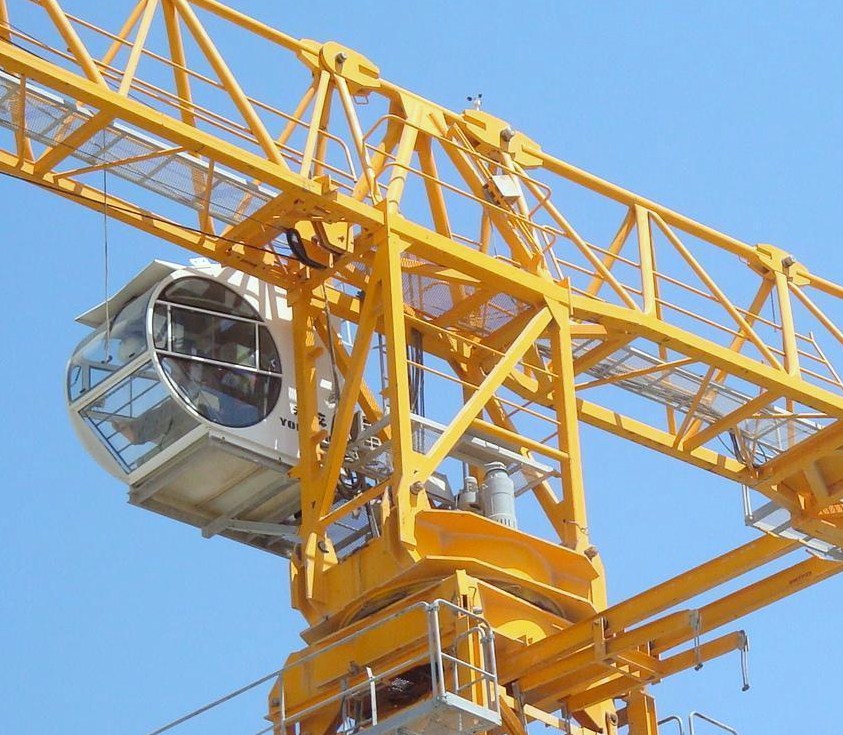
The construction hoist question on a Dubai high-rise site is rarely “do we need one” — that’s a given the moment you cross about 8 floors. The real questions are: what capacity, what speed, twin-cage or single, which brand, how high will the mast climb, what does the actual total cost end up being once you factor in mast extensions, spare parts, and dismantle.
This guide is the procurement playbook we walk every UAE / GCC client through before they sign a hoist PO. It covers the four configurations you’ll see on regional sites, how to size without over-spec’ing, how the three big brands actually compare, when rental beats purchase, and the regional procurement angles that turn a 6-week wait into a 5-day deployment.
If you already know what you need and just want a quote, the hoists hub has the in-stock model spec sheet — skip the article. If you’re deciding between configurations, read on.
What we mean by “construction hoist”
For the avoidance of confusion: on UAE construction sites, a “construction hoist” or “site hoist” almost always means a rack-and-pinion mast-climbing hoist. The cage runs up and down a steel mast bolted to the side of the building, driven by an electric motor that engages teeth on a rack along the mast. This is the GJJ / ORBIT / Alimak family.
Wire-rope (counterweight) elevator-style hoists exist but are rare on construction sites — they’re slower to install, require more headroom at the top, and don’t extend with the building. They’re more common in permanent-installation freight elevators that survive past end-of-project.
Throughout this guide, “hoist” means rack-and-pinion.
The four configurations you’ll see on UAE sites
Single-cage passenger-and-material (P&M)
The most common spec on mid-rise residential and commercial up to ~30 floors. One cage on a single mast, dual-certified for passengers and materials, capacity typically 1,500–2,000 kg, speed 36–63 m/min. Examples: ORBIT OTH-2024, GJJ SC200, MABER MB2032.
Pick this when: building under 30 floors, peak headcount under 80 workers, project duration under 18 months. The simplest hoist to deploy and the cheapest to operate.
Twin-cage passenger-and-material
Two cages on a shared mast (each with its own drive, controls, and counterweight tower). Effectively doubles throughput without doubling the footprint at the building edge. Examples: GJJ SC200/200 (2 × 2,000 kg), Alimak Scando 650, SAEZ 2032/2032.
Pick this when: peak headcount over 100 workers, materials volume is significant, or the building is past 30 floors and a single cage’s cycle time blocks crew productivity. The GJJ SC200/200 is the workhorse twin-cage we deploy most often on Dubai high-rise.
Material-only hoist
Single cage, materials only — no passenger certification. Slower drive (often 0–38 m/min) and simpler controls. Used alongside a P&M hoist when material volume is high enough that mixing crew movements with concrete buckets, drywall stacks, and scaffold sections becomes counterproductive.
Pick this when: material throughput exceeds passenger throughput, or you’re running a second hoist purely for goods to keep the P&M unit clear for people. Less common as a standalone choice; more common as the second hoist on a multi-tower site.
High-rise frequency-drive hoist
Twin-cage configurations with VFD (variable-frequency drive) motors that push speeds to 0–96 m/min and lift heights past 350 m. Reinforced mast, heavier counterweights, more complex tie-in geometry. Examples: GJJ SCD320/320, Alimak Scando 650 FC-HE.
Pick this when: building height exceeds 50 floors / ~250 m, or cycle time matters more than capex. Significantly more expensive (often 2-3× standard twin-cage cost) but the speed savings pay back fast on tall builds.
Sizing the hoist — the framework
The naive approach is to pick a hoist by maximum building height. The actual constraint is usually cycle time × peak shift volume, not lift height.
Step 1 — Peak shift workforce
Get the peak headcount from the construction schedule. For a typical Dubai high-rise residential, this is around 60–120 workers during structural phase, dropping to 30–60 during finishes. The peak number drives sizing.
Step 2 — Daily passenger movements
Workers ride the hoist at shift start, shift end, lunch, and 1–3 inter-floor trips during shift. Rule of thumb: 4 trips per worker per day. So 80 workers × 4 = 320 passenger movements per day.
Step 3 — Cycle time per trip
Cycle time = (height ÷ speed × 2 for round-trip) + (loading time, ~25 s) + (unloading time, ~25 s) + (waiting + door operation, ~15 s per floor stop)
For a 150 m building, hoist at 36 m/min: round-trip travel = 150 × 2 ÷ 36 × 60 = 500 s, plus ~75 s in loading/unloading = ~575 s per trip ≈ 9.5 min.
Step 4 — Capacity check
Total daily cycle time = 320 movements × 9.5 min ÷ (cage capacity in people, usually 12) ≈ 253 minutes ≈ 4.2 hours. That’s well under a 9-hour shift, so a single cage works.
If the answer is >5–6 hours, the cage is the bottleneck — go twin-cage or add a second hoist.
Step 5 — Material check
Estimate daily kg of materials per the construction program (drywall, mortar, fixtures, finishes). Divide by single-trip capacity. Add to passenger cycle time.
Step 6 — Add safety margin
Real-world ops lose 15–20% of theoretical capacity to breakdowns, scheduling friction, and the fact that nobody actually runs the hoist at maximum cycle rate. Multiply your sizing requirement by 1.2 before picking.
HOE’s engineering team runs this calc free as part of any quote — send the floor count, peak headcount, lift height, and project duration. We come back with a recommended configuration (single vs twin, capacity, speed) plus the reaction-force calcs for the foundation pad.
The brand landscape — GJJ, ORBIT, Alimak, others
Four brands cover ~90% of the UAE hoist market. Two are direct buyers’ choices, two are specialty.
GJJ — the volume leader
Chinese, founded 1979 in Hubei. Largest installed base across MENA. Stocked at HOE in Dubai. Strengths: broad model range (SC100 material-only up to SCD500 heavy twin-cage frequency drive), aggressive pricing, mature regional service ecosystem. The GJJ SC200/200 is the single most common twin-cage on Dubai high-rise.
Weakness: documentation primarily Chinese-translated to English, some operator training required for unfamiliar crews.
ORBIT — the polished alternative
Chinese OEM, sometimes specified on residential/hospitality projects where the cage finish matters during late-stage commissioning (handover staff using the hoist past safety-only phase). Slightly higher capex than GJJ for equivalent capacity, slightly better resale value, similar parts depth in Dubai.
Weakness: narrower model range than GJJ — single-cage configurations dominate the catalog; twin-cage choices are fewer.
Alimak — the European institution
Swedish, the historical category leader. So well-known that “Alimak” is often used as a generic term for any rack-and-pinion hoist (a la “Kleenex”). On Dubai projects: typically seen on joint-venture builds where European-spec compliance is a contract requirement, or on legacy installations being maintained. Significant capex premium (40–60%) over GJJ / ORBIT for equivalent capacity. We supply and service Alimak units but rarely sell new ones in MENA. See our Construction Hoist vs Alimak deep-dive for the full comparison.
Others (MABER, SAEZ, FAR, SCANDIC)
Italian, Spanish, Italian, Swedish — niche brands you’ll encounter on specific JV projects or in legacy installations. We supply parts and service for all of them; new sales are case-by-case.
A fuller brand-by-brand comparison framework exists for tower cranes — the same procurement logic applies to hoists: spec depth, regional parts availability, total cost of ownership, resale value.
Total cost — buy vs rent
Indicative ranges for a Dubai-stocked twin-cage P&M hoist on a 36-month deployment:
| Cost element | Purchase | Rental (36 mo, with maintenance) |
|---|---|---|
| Capex / monthly base | AED 600k–900k | AED 18k–28k / month |
| Erection (one-time) | AED 45k–70k | included |
| Mast extensions (per 6-9 m climb) | AED 8k–14k each | included |
| Quarterly maintenance | AED 6k–10k / visit | included |
| Spare parts allowance (anti-fall, motors, controllers) | ~3-5% of capex / year | included |
| TPI annual recertification | AED 8k–15k | typically included |
| End-of-project dismantle | AED 30k–50k | included |
| End-of-project residual value | 35-55% of capex (resale) | n/a |
Math on a 36-month deployment:
- Purchase, AED 750k unit, all-in total cost (capex + erection + extensions + maint + parts + TPI + dismantle): ~AED 1,050,000. Recover ~AED 350,000 on resale. Net ~AED 700,000.
- Rental at AED 22k/month × 36 months: AED 792,000. No residual.
For 3-year deployments, purchase wins if you have the cashflow and the disposal channel. For under 18 months, rental wins on flexibility (no end-of-project liquidation, no capex hit in the wrong fiscal period).
Real procurement decisions also factor in tax treatment, financing cost, and project-portfolio considerations (is there a second project that can absorb the hoist after the first finishes?). We help clients work through this calc honestly — sometimes the answer is purchase, sometimes rental, sometimes a hybrid (buy and lease to another contractor mid-project).
Erection, climbing, dismantle — what to budget
Almost as expensive as the hoist itself, often forgotten in early-stage estimates.
- Initial erection (base section, first 3-6 mast sections, drive unit, electrical hookup, base wall ties, commissioning, TPI): typically 4-7 days on site, AED 45k–70k.
- Climbing extensions (adding mast sections every 6-9 m as the structure rises): ~4-6 hours per extension, AED 8k–14k including section + crew + crane time.
- Dismantle (reverse of erection, plus haulage): 3-5 days, AED 30k–50k.
- Foundation pad design + reaction-force calcs: free with HOE-supplied hoists; AED 6k–12k if commissioned separately on a customer-supplied unit.
The pad design is the same engineering discipline as our tower crane foundation work — reaction-force envelope per the OEM, structural sign-off by your project engineer, signed method statement.
Maintenance and the 24/7 question
Hoists are simpler than tower cranes mechanically, but they break in less predictable ways because they cycle far more frequently — a hoist might cycle 80 times a day, a tower crane might lift 30 times a day.
The maintenance regime that works in MENA conditions:
- Daily: operator visual check before first cycle (cage doors, controls, anti-fall warning lights).
- Weekly: HOE technician on-site (or in-house trained crew) — rack & pinion inspection, motor brush wear, drive lubrication, limit-switch test.
- Monthly: anti-fall safety device functional test (load drop test in controlled descent).
- Quarterly: full mechanical inspection by HOE — motors, gearboxes, cable terminations, mast bolts torque check, structural welds visual.
- Annually: TPI recertification by accredited body (Dubai Municipality / Trakhees / equivalent).
- Every 3 years: anti-fall safety device replacement — regardless of test results, the governors have a hard 3-year service life from the manufacturer.
When something does break mid-shift, the HOE 24/7 breakdown line (+971 50 641 5819) is the same line that covers our tower-crane work — same engineers, same response times. UAE site: typically on-trailer within 4-8 hours. KSA / wider GCC: 12-48 hours depending on customs and freight.
Procurement steps + realistic lead times
The procurement workflow that gets a hoist on your site fastest:
- RFQ to HOE with project parameters (height, headcount, duration, site location). We come back inside 48 hours with a recommended spec + fixed-price quote + reaction-force envelope for the foundation pad.
- Structural sign-off on the foundation pad by your project engineer (1-2 weeks typically, parallel-tracked with PO finalization).
- PO and deposit. Standard terms 50% on order, 50% on dispatch; established UAE contractors qualify for Net 30 / Net 60.
- Foundation pour (depends on site programme; pad needs ~7 days minimum curing before erection).
- Erection: 4-7 days. Hoist commissioned, TPI inspector booked, training delivered to your operator.
- First climb: typically at 18-21 m above starting height — done in one shift, ~4 hours of downtime.
Total elapsed time from RFQ to running hoist on a UAE site with HOE-stocked GJJ / ORBIT: 3-5 weeks. For non-stocked configurations or KSA / wider GCC deployments, add 4-8 weeks for freight.
Getting started
Send the project parameters to sales +971 50 144 4810 or the contact form:
- Building height (m) and floor count
- Peak headcount (workers per peak shift)
- Project duration (months)
- Site location
- Specific brand preference (if any) or “open”
48-hour turnaround on the quote including reaction-force calcs and a recommended configuration. For projects with existing hoists that need maintenance, parts, or extension, the 24/7 breakdown line handles that side: +971 50 641 5819.
The full hub of HOE hoist resources (in-stock models, spec sheets, cluster articles) lives at /hoists. For the cross-cluster procurement view (parts, mast sections, logistics), see the spare-parts hub and the UAE spare-parts buyer’s guide.
People Also Ask
Frequently Asked
What's the difference between a passenger hoist, a material hoist, and a P&M hoist?
How do I size a construction hoist for my project?
GJJ or ORBIT — which brand makes more sense in the UAE?
What's the typical lead time for a construction hoist in the UAE?
Should I buy or rent the hoist?
How tall can a construction hoist actually reach?
Do I need to budget for foundation works under the hoist?
What about safety certifications?
Need this on a real site?