

UAE Megaprojects & Tower-Crane Lifting Demand: What the Scale Actually Needs (2026)
From a 725m supertall on Sheikh Zayed Road to Palm Jebel Ali villas and a 352m RAK resort tower, the UAE's 2026 pipeline demands specific lifting — the crane and hoist class each scale needs, no project claimed as ours.
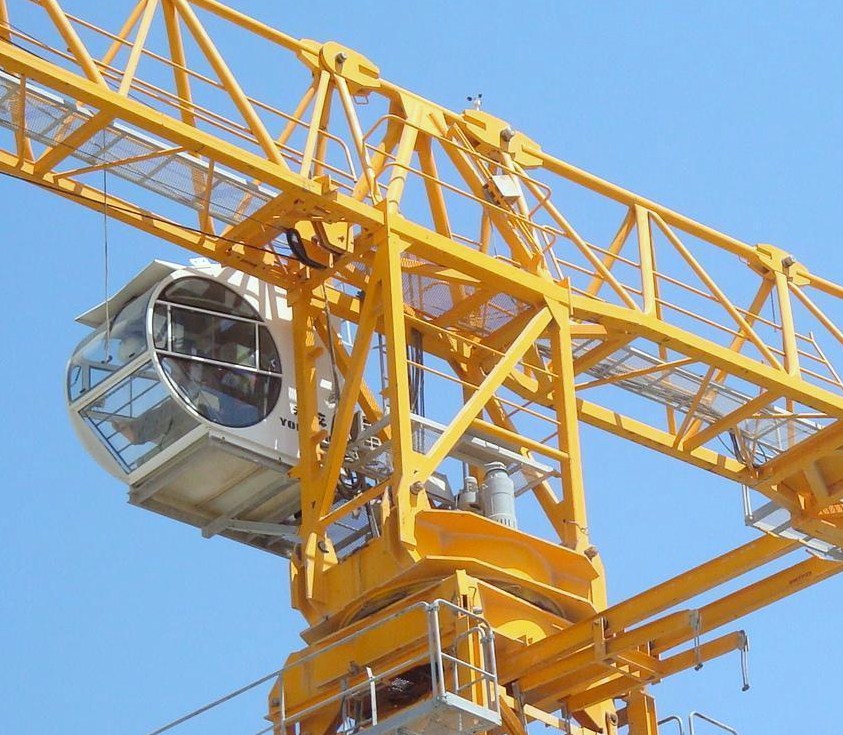
The UAE’s 2026 construction pipeline is one of the densest concentrations of high-rise and waterfront lifting demand anywhere in the region. A 725-metre supertall is reported rising on Sheikh Zayed Road, villa clusters are being staged across Palm Jebel Ali, a vast waterfront district is filling out at Dubai Creek Harbour, and 100 kilometres north a 350-metre-plus resort tower has topped out on Al Marjan Island in Ras Al Khaimah. Each of those is a different lifting problem, and each demands a specific class of tower crane and construction hoist — not just “a big crane”.
This guide is the honest version. It does not claim HOE supplied, erected or serviced any named megaproject — we are a UAE-wide supplier serving the whole country from our single Dubai base, and we reference these programmes only as the clearest public illustration of the lifting envelope the market now routinely asks for. What we can do is map equipment to demand: tell you what each scale of work genuinely requires, where our range fits, and what we need from you to recommend a crane or hoist for your package. If you already know the spec and just want a number, the products hub and a quote request are the fast path — skip the article.
How we frame this: demand context, never a client list
Before any of the project names below, one rule governs the whole piece: the megaprojects are demand context, not a deployment claim. Every tower crane and hoist you may have seen on Palm Jebel Ali, Burj Azizi, Dubai Creek Harbour or Wynn Al Marjan belongs to other suppliers and rental houses. We name these programmes the way any honest supplier should — as the most legible public examples of the scale of lifting the UAE now needs — and nothing more.
There is also a staleness warning to read alongside every figure here. Heights, completion dates and percentages for UAE megaprojects move quickly, and any guide that treats a render or a press date as settled fact will age badly. The numbers in this article are as reported in mid-2026; verify the current status of any specific programme against official developer and government sources before you build a procurement plan around it. What does not change is the underlying point for equipment selection: supertall towers, waterfront megazones, villa clusters and coastal resort towers each demand a particular class of crane and hoist, regardless of which masthead project happens to be running this quarter.
Supertall work (Burj Azizi-class, 725m): luffing-jib + high-speed twin-cage hoists
A supertall tower — Burj Azizi is reported at 725 metres on Sheikh Zayed Road, with completion targeted toward the late 2020s — is the most demanding lifting problem the UAE market poses. At that height the crane question is not “how much reach” but “what fits, climbs and survives a storm in a tight downtown footprint”.
The answer is almost always a high-capacity luffing-jib crane, internally climbing inside the core or a service shaft. Three drivers force that configuration:
- Out-of-service footprint. A luffing jib stows raised and swings inside a radius a flat-top could never manage — essential on a congested Sheikh Zayed Road plot where oversailing neighbouring buildings is restricted.
- Internal climbing. Running an external mast hundreds of metres tall as standalone steel is impractical; internal climbing lets the crane rise with the structure and keeps the free-standing problem manageable. The tie-in and free-standing-height geometry behind that is worked through in our tower crane tie-ins and free-standing height guide — read it for the engineering rather than re-derived here.
- Heavy peak lifts at height. Slab pours, plant skids, precast and façade modules are the lifts that size the crane, and reading the load chart properly is where luffing cranes catch people out. Our load charts and lifting capacity guide covers how to size on the lift envelope rather than the brochure tip load.
But on a supertall the crane is only half the problem. Once the frame is climbing, the bottleneck becomes vertical transport — and that is the job of a high-speed, twin-cage construction and passenger hoist. The economics of twin-cage versus single-cage on tall buildings are covered in detail below; for a 725m-class tower the answer is rarely in doubt.
Waterfront megazones (Dubai Creek Harbour): large-plate, multi-crane footprints
Dubai Creek Harbour is a different shape of demand entirely. Rather than one extreme tower, a waterfront megazone is a wide programme of many mid- and high-rise plots filling out in parallel across reclaimed and creek-side land. The lifting profile that suits it is many flat-top (topless) hammerheads, not a handful of supertall luffers.
The flat-top earns its place here because dropping the A-frame above the jib lowers overall height, simplifies erection, and — critically on a dense multi-plot zone — makes airspace sharing between adjacent cranes easier. When several cranes work overlapping slew radii across neighbouring plots, anti-collision systems and disciplined airspace planning become mandatory, and managing a fleet of that size is a logistics exercise in its own right. Our multi-crane fleet hire for UAE and GCC megaprojects guide covers how a parallel-plot programme stages, sequences and shares a crane fleet — the “how” this section deliberately links rather than restates.
For the zone-by-zone Dubai site realities behind Creek Harbour and the city’s other high-rise corridors — congestion, oversailing, coastal salt and which municipality desk reviews your plot — see our Dubai high-rise zone site notes.
Villa clusters (Palm Jebel Ali): many medium cranes, staged logistics
Palm Jebel Ali is reported at roughly a quarter complete in mid-2026, with hundreds of villas under major contracts and first handovers expected from 2027 (confirm the current status before relying on it). For lifting, a villa-cluster megaproject is the opposite of a supertall: instead of a few extreme machines, it wants a large number of smaller, fast-to-mobilise cranes — typically hammerheads in the lighter classes — staged plot-by-plot to the handover sequence.
The engineering challenge moves from “how high and how heavy” to “how many, how fast, and in what order”. Cranes are mobilised, erected, run for the frame phase, then dismantled and moved to the next cluster, so mobilisation and dismantle efficiency dominate the cost — not peak capacity. The same fleet-sequencing thinking from the waterfront section applies, scaled to medium cranes across many small plots. On reclaimed island ground there is also a foundation consideration: engineered fill and softer near-surface soils change the crane pad design, which the project structural engineer signs off against the OEM reaction envelope.
Northern Emirates resort towers (Wynn Al Marjan, ~352m): high-rise coastal lifting
The Northern Emirates have their own supertall-class demand. Wynn Al Marjan Island in Ras Al Khaimah is reported to have topped out in December 2025 at around 283 metres of structure (roughly 352 metres with its spire) and is reported to be targeting a 2027 opening — making it the tallest in the Northern Emirates by a wide margin (as reported; verify current status). It is demand context only — HOE has no involvement in Wynn Al Marjan or any named project.
A 70-floor coastal resort tower of that class needs the same luffing-jib-plus-twin-cage-hoist combination a downtown supertall does, with two coastal-and-island overlays: wind and salt. An exposed Al Marjan plot sees more frequent operational wind pauses and Shamal exposure than an inland city site, and salt-laden air accelerates corrosion across ropes, cabinets and steel — tightening component selection and maintenance intervals. We cover the demand picture for the whole RAK high-rise surge in our Ras Al Khaimah and Wynn Al Marjan lifting-demand guide, and HOE serves RAK and the Northern Emirates from our Dubai base via the UAE road network — never from a fabricated in-emirate yard.
Abu Dhabi islands (Saadiyat, Yas, Reem, Hudayriyat): cultural and high-rise mix
Abu Dhabi’s megaproject demand is concentrated on its islands, and it is a more varied mix than Dubai’s. Saadiyat carries low-rise, long-span cultural buildings; Al Reem runs genuine high-rise residential and commercial towers; Yas blends leisure and mid-rise; Hudayriyat is a newer mixed development. That spread means the crane class swings widely — flat-tops for the wide cultural plates, luffers for the tight high-rise clusters, and the lighter classes for the leisure and mid-rise work.
Crucially, the approvals stack is different in the capital. Abu Dhabi runs municipal approval through ADM under the Department of Municipalities and Transport (DMT), and lifting safety sits under the ADOSH-SF framework (the former OSHAD, now under ADPHC) and its Code of Practice 34 — a distinct system from Dubai’s DM and Trakhees model. We do not re-teach that here; the honest, hedged map lives in our dedicated Abu Dhabi vs Dubai tower-crane supply guide, and you should confirm current requirements with ADM, DMT and ADPHC before relying on any summary. HOE serves Abu Dhabi from its Dubai base — there is no Abu Dhabi yard.
Why supertall needs high-speed hoists, not just bigger cranes
It is worth pulling the hoist question out on its own, because it is the part of supertall lifting that buyers most often under-spec. The instinct on a tall tower is to focus on the crane — but above a certain height the schedule is governed by vertical transport throughput, not lift capacity.
Picture the round trip: a single-cage hoist travelling 300-plus metres up a face, loading and unloading crews and finishing materials, then returning empty. Over a full fit-out, with a relentless landing-level demand, that round-trip time becomes the constraint that decides whether trades stand idle. The fixes are higher hoisting speed and a twin-cage configuration — two independent cages on one mast roughly doubling throughput without doubling footprint. The crossover point where twin-cage economics beat a second single-cage unit is worked through, with the cage-payload and crew-size variables, in our twin-cage vs single-cage hoist economics for UAE high-rise analysis. The summary for megaproject planning: on a supertall, the hoist is a primary schedule risk, and it should be specced as carefully as the crane.
The class of work this section describes maps onto a specific demand-and-equipment table:
| Megaproject scale | Typical lifting profile | Equipment class HOE supplies |
|---|---|---|
| Supertall tower (Burj Azizi-class, 725m) | A few internal-climbing luffers + high-speed twin-cage hoists | Heavier YONGMAO STL luffing, POTAIN/ZOOMLION luffers; GJJ/ORBIT twin-cage high-speed hoists |
| Waterfront megazone (Creek Harbour) | Many flat-tops across parallel plots, anti-collision | Flat-top (topless) hammerheads in the 8–16 t classes for parallel deployment |
| Villa cluster (Palm Jebel Ali) | Many medium cranes staged to the handover sequence | Lighter hammerheads, fast mobilise/dismantle cycles |
| Coastal resort tower (Wynn Al Marjan, ~352m) | Luffer + twin-cage hoist, wind/salt overlay | High-capacity luffers; corrosion-aware component selection; twin-cage hoists |
| Abu Dhabi islands (Saadiyat, Reem, Yas) | Mixed: flat-top, luffer and lighter classes | Multi-brand range matched per package |
Status moves fast — verify before you plan
Every figure in this guide is a mid-2026 snapshot and should be treated as such. Burj Azizi’s reported 725m height and late-2020s completion, Palm Jebel Ali’s reported ~25% progress and 2027 handovers, and Wynn Al Marjan’s reported December-2025 topping-out and 2027 opening are all subject to change — UAE megaproject schedules and scopes have shifted repeatedly. Anchor any procurement plan to confirmed-active programmes and verify the current position against official sources rather than this page.
For equipment selection the practical implication is the same one that runs through this whole article: size to your package, not to a headline number. A megaproject is a programme of many packages, each with its own crane and hoist count; “how many cranes does Creek Harbour need” has no honest single answer, but “what does my specific tower or plot need” always does.
Matching equipment to your project’s scale with HOE
HOE supplies, rents, erects, maintains and parts tower cranes and construction/passenger hoists for megaproject-scale and supertall work across the whole UAE from our single Dubai base. We compete on multi-brand choice — YONGMAO, POTAIN, ZOOMLION, XCMG and SYM cranes, GJJ and ORBIT hoists — on genuine OEM parts depth, and on full-lifecycle service, not on a fabricated in-emirate fleet. Coverage of every emirate runs from Dubai via the UAE road network; mobilisation is typically on-trailer within 4–8 hours within the UAE, subject to traffic, site access and clearance — never a guaranteed fixed time.
The full commercial picture — sale, rental, parts and service across Dubai’s high-rise zones — sits on our Dubai tower crane supplier hub, and if you want the head-term commercial detail, HOE is a specialist tower crane supplier and rental company in Dubai rather than a mobile-crane generalist. For rental specifically, the tower crane rental page covers wet- and dry-hire across the UAE.
To recommend a crane class, a luffing-versus-flat-top call, a hoist configuration or a parts package for your package, we need:
- Building height and floor count, or structure type for non-building work
- The heaviest scheduled lift — weight, radius and the level it lands on
- Plot constraints — adjacent cranes, oversailing limits, airspace conflicts
- Peak lift rate from the programme, and for hoists the crew size and landing levels
- Project duration, location/zone, and any preference on buy vs rent or brand
Getting started
If you are scoping a UAE megaproject package — a supertall tower, a waterfront megazone, a villa cluster or a coastal resort tower — send us the lift parameters and we will recommend the right class of equipment, a load-chart fit-check and the foundation reaction envelope for your structural engineer. Sales: +971 50 144 4810. For an existing crane or hoist that needs parts, maintenance or emergency support on a live site, the 24/7 breakdown line is +971 50 641 5819, and you can reach the team at inquiry1@hoe.ae.
Tell us about the package and request a quote — we will respond with a spec and an indicative figure, and we will be straight about what the equipment can and cannot do, and about the fact that we frame these megaprojects as demand context, never as our own. The FAQs below cover the questions we are asked most on megaproject and supertall lifting.
People Also Ask
Frequently Asked
Which tower crane and hoist suit a supertall UAE tower?
What lifting equipment do UAE megaprojects typically use?
Is HOE involved in Palm Jebel Ali, Burj Azizi or Dubai Creek Harbour?
Does island or waterfront work change crane and wind requirements?
Why do supertall towers need high-speed construction hoists?
How do I scope equipment for a large or supertall project?
Need this on a real site?