

Tower Crane Third-Party Inspection & Certification in Saudi Arabia (TPI, Aramco & HCIS)
Saudi Arabia's third-party inspection cycle mirrors the UAE pattern but runs through a different ecosystem — international houses plus local ISO 17020 bodies — with an Aramco/HCIS layer on industrial sites.
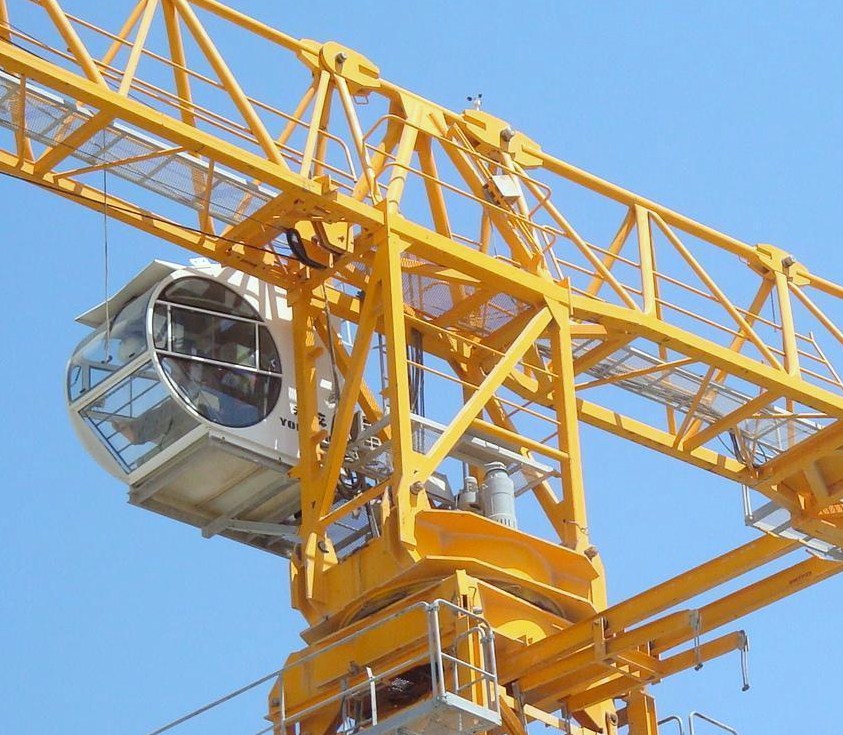
A tower crane in Saudi Arabia lives or dies on its certificate the same way it does anywhere else in the GCC — but the route to that certificate, and who has to accept it, is not the route a UAE contractor is used to. The engineering of a thorough examination is broadly common across the region. The institutions around it are not. In Saudi Arabia the certificate flows through your main contractor and client, the municipal framework and the Saudi Building Code rather than a Dubai-style authority split, and on industrial work an Aramco and HCIS layer sits on top that can outweigh everything else.
This guide is the working playbook for tower-crane third-party inspection (TPI) and certification on Saudi sites — the cadence the annual examination sits on, who can actually inspect in the Kingdom, how load testing is staged, what the Aramco and HCIS overlay adds on industrial scopes, and the documentation file an auditor expects to find. It is the Saudi half of a GCC pair: where the Emirates regime differs, this post links across to the UAE tower crane TPI guide rather than re-teaching it. Throughout, treat intervals, percentages and GI references as typical regional practice to verify against current Saudi requirements — not as statutory numbers you can quote on a permit. As an independent GCC specialist, HOE supports this work from its Dubai base as the tower crane supplier in Saudi Arabia that many contractors call when a crane is locked out and the programme is stalling.
The Saudi TPI cycle: daily, weekly, monthly and annual
The headline certificate is the periodic thorough examination — commonly annual for a crane lifting goods. But it sits on top of a layered inspection routine, and a competent inspector audits the lower-cadence checks before opening their own clipboard. Gaps in the daily and monthly records make the periodic examination harder and slower.
| Cadence | Who does it | What it covers |
|---|---|---|
| Daily / pre-use | Crane operator | Visual checks before first lift — brakes, hook latch, wire-rope condition, limit-switch indicators, oil leaks, wind reading. Logged in the operator daybook. |
| Weekly | Site competent person | Structural bolts and tie-collars (visual), gearbox oil, brake-pad wear, slewing-ring grease, control-panel condition. Logged on a checksheet. |
| Monthly | Competent person + technician | Anti-fall and overload functional tests, brake test under load, limit-switch trip tests, anemometer check. |
| Six-monthly | Accredited / approved body | Typically applied where equipment lifts persons — passenger hoists especially. Reduced examination plus a load test. |
| Annual (periodic) | Third-party inspection body | Full structural / mechanical / electrical / safety-device thorough examination plus a periodic load test. New certificate issued. The big one. |
These intervals follow the BS 7121 / LOLER-derived pattern used across the GCC and are frequently tightened by the main contractor’s lifting plan or the client’s project safety requirements. The annual figure is a sensible default for a goods-lifting crane, but verify the exact interval for your equipment and site — and assume it is shorter on anything that lifts personnel or sits inside an Aramco or HCIS scope.
First-use and periodic load testing — practice, not statute
Two test levels recur across GCC practice and Saudi sites generally follow them. After a new installation or any major structural repair, a proof load test is run at an overload margin above Safe Working Load (SWL) before the crane enters service; the periodic examination then runs a test at a lower margin over SWL at a series of radii. The widely used figures are an overload proof test for commissioning and a smaller periodic overload thereafter — but the exact percentages, hold times and radii are set by the applicable standard, the OEM and the client’s requirement, so present them as typical practice and confirm against current Saudi and client specifications rather than quoting a fixed number.
Mechanically the test is the same anywhere: a certified load assembled from blocks, water bags or plates and weight-verified at the hook; the crane lifts, holds for the prescribed time, slews and travels across radii, and the inspector observes brake holding, structural deflection and limit-switch behaviour. One Saudi-specific wrinkle is worth flagging — much of the Kingdom runs on a 60Hz supply against the UAE’s 50Hz, which changes motor speeds and can affect how brakes and motions behave during functional and load testing of a crane that was specced for a 50Hz site. That cross-border trap is covered in depth in the 50Hz to 60Hz motor and VFD guide; flag it to your inspector so a frequency-driven behaviour is not mistaken for a fault.
Who can inspect in Saudi Arabia
Two kinds of body issue tower-crane certificates in the Kingdom, and a competent crane file usually involves choosing between them on the basis of client acceptance rather than reputation alone.
- International inspection houses with KSA benches — SGS, Bureau Veritas, the TUV family (Rheinland, SUD, Nord), Applus, Intertek and Lloyd’s Register. These are the same names UAE contractors recognise from the UAE TPI regime, and they bring standardised report formats and bilingual inspectors.
- Local Saudi inspection bodies accredited to ISO/IEC 17020 as inspection bodies, often working to LEEA- and LOLER-aligned procedures. These can be faster to mobilise to a Riyadh, Jeddah or Dammam site and are frequently pre-accepted on municipal work.
The decisive question is not which logo is most famous but whether the body is independent of the crane owner, competent for tower cranes specifically, and accepted by your main contractor and the site’s client. On Aramco-scope work that acceptance narrows sharply to an approved-vendor list. Confirm the body is acceptable for the specific site before you book, not after the inspector has driven out.
The Aramco overlay on Eastern Province and industrial scopes
A large share of Saudi heavy construction sits in or beside the Eastern Province energy sector, and that is where the Aramco overlay becomes the dominant compliance factor. Saudi Aramco maintains its own engineering and safety requirements for lifting equipment, referenced in industry guidance by General Instruction (GI) numbers in the lifting-and-rigging series. Those documents are controlled and revised by Aramco; this post deliberately does not reproduce their text or assert a specific clause.
What the overlay means in practice on an Aramco-scope crane:
- The crane, slings and rigging gear must be inspected, colour-coded and certified to Aramco’s current requirement — often by an Aramco-approved third party, not simply any accredited body.
- Operators, riggers and lift supervisors are separately tested and approved; the competence burden is heavier than on a standard municipal site. That side is covered in the Saudi crane operator licensing guide.
- Documentation, lead time and access control all expand accordingly.
The only authoritative source for any of this is the current Aramco-issued GI applicable to your contract, plus the approved-vendor list. Confirm the exact revision and acceptable bodies with Aramco or your main contractor before mobilising — never plan an Eastern Province lift on the strength of a GI number quoted second-hand.
What HCIS governs — and what it does not
The High Commission for Industrial Security (HCIS) is the Saudi authority for security and safety on designated industrial facilities — broadly the oil, gas, petrochemical and other strategic sites, much of it Aramco-adjacent. It is important to frame HCIS correctly: it is the industrial-site gate, not a crane-certifying authority. HCIS does not issue your tower-crane TPI certificate. What it does is wrap your entire lifting operation — equipment, personnel, documentation, access — inside a broader industrial-security and safety regime that must be satisfied to get on and stay on the facility.
The supplier-side implication is simple. If a crane is heading to a refinery, gas plant, petrochemical complex or similar, assume an HCIS layer applies on top of the normal TPI, budget the extra induction, documentation and approval lead time, and confirm the specific requirements with the facility owner and main contractor early. The HCIS layer also commonly appears alongside the permit and building-approval route, which is set out in the Saudi MOMRAH and Balady permits guide.
The inspection-ready Saudi crane file
A Saudi or Aramco auditor reads the file in a predictable order, so build it in that order. A crane that is genuinely inspection-ready carries, as a minimum:
| Document | What it proves |
|---|---|
| TPI certificate | Current thorough-examination certificate — body, certificate number, crane serial, SWL, issue and expiry date. The first thing checked. |
| Thorough-examination report | Full structural / mechanical / electrical / safety-device report, defect list and rectification status. |
| Load-test record | Weights, radii, hold times and observations from the periodic or proof test. |
| Foundation & erection sign-off | Pad and tie-in design against OEM reaction loads and the Saudi Building Code (SBC), signed by the responsible engineer. |
| Operator & rigger competence | Current certificates for the operating team; expanded on Aramco scope. |
| Lifting plan / method statement | The lift the crane is actually doing, with the client’s approval. |
| Client / Aramco / HCIS approvals | Colour-coding records, approved-vendor evidence and site-specific clearances on industrial scopes. |
Keep the originals on site in the operator’s logbook or site safety file, with a duplicate set held by the project HSE manager. The SBC and foundation side of this file ties back to the structural basis of the crane base — a topic the Saudi giga-project scale guide touches on for the heavier classes of crane those programmes demand.
How the Saudi regime differs from the UAE
For contractors moving crews and cranes across the GCC border, the engineering travels but the paperwork does not. The differences worth internalising:
- Acceptance route. UAE certificates are accepted by Dubai Municipality, Trakhees, the free zones and OSHAD against a known roster of bodies. In Saudi Arabia, acceptance flows through the main contractor and client, the MOMRAH/municipal framework and the SBC — and on industrial work through Aramco and HCIS.
- Inspection ecosystem. KSA mixes the international houses with local ISO 17020 bodies; client pre-approval, not brand, decides who you can use.
- Power frequency. 60Hz in much of Saudi Arabia versus 50Hz in the UAE — relevant during functional and load testing, and a documentation point at import. See the 50Hz vs 60Hz guide.
- Industrial overlay. There is no UAE equivalent to the weight of the Aramco/HCIS layer on Eastern Province energy work.
The wire-rope, brake and safety-device inspection mechanics, by contrast, carry across almost unchanged — the UAE wire-rope inspection guide and the broader UAE operations compliance guide describe the hands-on examination in detail, and the technique is the same on a Riyadh site as a Dubai one.
Construction and passenger hoists: the anti-fall device
Hoists carry their own certification burden, and because they lift persons the examination interval is usually shorter than for a goods-only crane. The progressive anti-fall safety device — SAJ-type governors and OEM equivalents — is a life-safety component with its own functional drop test and a manufacturer service life, typically three years from date of manufacture regardless of running hours. Under the GCC inspection practice Saudi sites follow, the device is functionally tested at examination, its manufacture date is checked against its service life, and an over-age device is a stop-work finding until replaced.
Treat the device as a scheduled replacement cost rather than a surprise, and keep its certificate and date record in the on-site file. The mechanics of the device — how the centrifugal governor arrests a runaway cage and how the drop test is staged — are covered in the anti-fall safety device guide; the certification principle carries straight across to the Saudi framework.
Keeping cranes certified across mobilisations and climbing
A certificate is a snapshot, and Saudi programmes — especially remote and phased ones — move and climb cranes constantly. Each event has a certification consequence. A crane that has been dismantled and re-erected on a new pad needs its erection and foundation sign-off refreshed and, depending on the gap and the client’s rule, may need a re-examination before it lifts again. A crane that has been idle for an extended period (commonly three months or more) typically needs a return-to-service inspection even if the periodic certificate is still in date, because no one has confirmed nothing drifted while it stood. Every climbing operation that adds mast sections changes the free-standing height and tie-in arrangement the original sign-off was based on.
The practical rule: tie the inspection plan to the crane’s movements, not just the calendar, and keep the genuine OEM parts that rectification depends on close to hand. Sourcing those parts into the Kingdom — and the SABER/SASO conformity that governs bringing them in — is covered in the Saudi spare parts guide and HOE’s parts cluster.
How HOE supports KSA certification
HOE works as an independent GCC specialist serving Saudi Arabia from its Dubai depot, and the Inspection & Rental, Breakdown & Maintenance and Spare Parts & Logistics services are built around keeping a crane certified and lifting. In practice that means booking the thorough examination with the body the client accepts, staging the load test, holding the high-frequency rectification parts — anti-fall devices, brakes, limit switches, common mast sections — so a finding does not turn into a multi-week stall, and getting a crew moving when a crane fails examination and is locked out of service.
Because HOE serves both 50Hz UAE and 60Hz Saudi sites, it is also placed to flag the frequency-driven behaviour that can surface during functional and load testing of a crane crossing the border. The aim is the same on a Riyadh tower as a Dubai one: the inspector arrives, the file is in order, the load test is clean, and the certificate renews without stalling the programme.
Getting a quote and booking support
For tower-crane and hoist certification support across Riyadh, Jeddah, Dammam and the Eastern Province, Mecca, Medina, the Tabuk/NEOM region and the wider GCC, HOE coordinates the third-party examination, the load test and any rectification from its Dubai base.
- Sales / inspection & rental booking: +971 50 144 4810
- 24/7 breakdown / urgent rectification when a crane fails examination: +971 50 641 5819
- Email:
inquiry1@hoe.ae - Contact form: request a quote →
For pricing, send the crane make, model and serial, the site and client, the examination interval required and whether the scope is Aramco or HCIS-governed — quotes are issued in SAR and we do not publish fixed prices because the work is configuration- and client-specific. The Saudi Arabia hub sets out the full GCC offer, and the FAQs below answer the specific questions — who can inspect, how often, the Aramco and HCIS overlay, and the hoist anti-fall device — that come up most on Saudi sites.
People Also Ask
Frequently Asked
Who can perform third-party crane inspection and load testing in Saudi Arabia?
How often must a tower crane be inspected in Saudi Arabia?
What are Saudi Aramco's crane inspection requirements for contractors?
What is HCIS and does my crane operation on an industrial site need approval?
How does Saudi tower crane inspection differ from the UAE?
Do construction hoist anti-fall devices need separate certification in KSA?
What documents should an inspection-ready tower crane carry on a Saudi site?
Need this on a real site?