

How to Choose a Tower Crane for UAE Construction Projects — 2026 Procurement & Engineering Guide
Heat, sandy soils, shamal storms and overlapping permit zones make UAE tower-crane procurement its own discipline. The working engineer's playbook for picking, sizing and deploying a crane that survives a Dubai build.
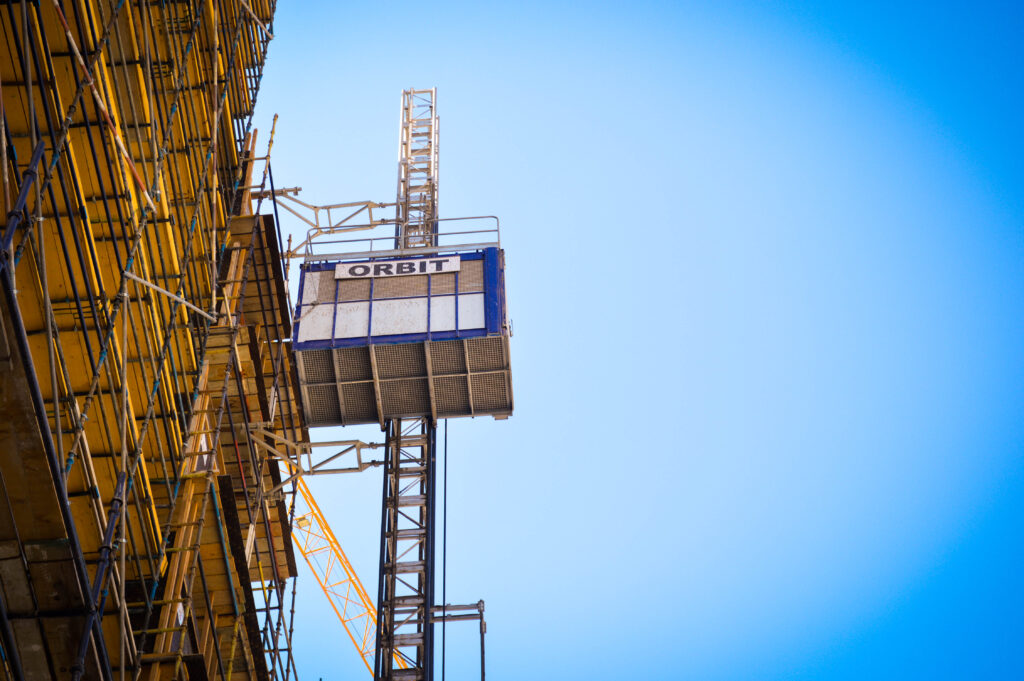
Tower-crane procurement in the UAE is not a generic equipment-buying exercise. The combination of 50°C summer ambients, calcareous sand foundations, shamal storms that drop 80 km/h gusts into a March afternoon, and a permit landscape split across Dubai Municipality, Trakhees, JAFZA, DAFZA, ADM/DMT and OSHAD means that the same crane that runs uneventfully on a German build can shed motors, trip VFDs and miss its free-standing height by ten metres on a Dubai high-rise.
The 2026 UAE construction pipeline pushes this further. Burj Azizi at 725 m, Palm Jebel Ali villas in handover, Wynn Al Marjan Island on a 2027 schedule, Etihad Rail Phase 2, Hudayriyat and Therme Dubai — every one of those projects pulls heavy lift gear out of regional stock and pushes lead times. Picking the wrong crane costs structural-frame milestones, not just money.
This guide is the working engineer’s playbook we walk every UAE client through before they sign a tower-crane PO. If you know what you need and want a quote, the products hub has the spec sheet — skip the article. Otherwise, read on.
The short answer — a quick decision matrix
The full sizing math is below; this table is the 30-second view for typical UAE project profiles.
| Project profile | Recommended crane class | Indicative model | Why |
|---|---|---|---|
| Villa compound / low-rise residential (≤ 6 floors) | Self-erecting or small flat-top, 4–6 t | Potain Igo / Yongmao STT133 | Fast erect, low capex, simple permit |
| Mid-rise residential / commercial (8–25 floors) | Hammerhead flat-top, 8–12 t | Yongmao STT153 / Potain MCT 219 | Workhorse spec, depot-stocked, balanced TCO |
| Tall residential / commercial (25–50 floors) | Hammerhead flat-top, 16–24 t | Yongmao STT293 / Potain MCT 385 | Lift envelope handles full slab pours, 60 m free-standing |
| Downtown / Marina cluster (any height) | Luffing jib, 10–24 t | Potain MR 295 / Yongmao STL220 | Tight slew radius, no over-sail conflict |
| Super-tall (50+ floors / over 250 m) | Internal-climbing luffing or heavy hammerhead | Potain MR 418 / Yongmao STT423 | Tie-in geometry and high free-stand |
| Infrastructure (bridges, viaducts, rail) | Heavy hammerhead, 24–32 t | Zoomlion T8030 / Yongmao STT423 | Long jib reach and heavy tip load |
| Modular / fast-track villa cluster | Self-erecting, 4–5 t | Potain Igo / Liebherr 81K | Trailer-mobile, no full erection crew |
Use this as a starting position, not a final answer. Real selection runs through lift envelope, free-standing height, climbing path, jib type and project duration — the five questions every UAE project needs to close before placing a crane order.
The five questions every UAE project must answer
1. Maximum load × radius
Pull the heaviest scheduled lift from the construction programme and the radius at which it must be delivered. This is the lift envelope. Concrete buckets, formwork tables, MEP plant units, precast panels and façade modules are the usual headline lifts. A 4 t mock-up panel at 40 m radius is a different crane from a 12 t plant skid at 22 m radius — same site, different sizing.
Apply a 25% safety margin to your headline lift and check against the crane’s load chart at the worst-case radius you’ll operate. The chart drops sharply with radius — a Yongmao STT293 rated 16 t at the root drops to roughly 2.7 t at 70 m. Don’t pick on tip load alone; pick on the actual lift you’ll be doing at the radius you’ll be doing it.
If you have a single outlier heavy lift, sometimes the right answer is a hired mobile crane for that lift and a smaller tower crane for the rest of the build. We work that calc with clients regularly.
The load charts and lifting capacity guide walks through how to read a chart properly — every UAE project engineer signing off a crane selection should be fluent in this.
2. Free-standing height
The OEM-rated free-standing height is the maximum the crane will stand without tying back to the structure, under EN 14439 design wind. Typical numbers: Yongmao STT133 around 40–45 m, STT293 around 50–60 m, Potain MCT 385 around 60–65 m, larger heavy-lift hammerheads 70–80 m.
For UAE high-rise, free-standing height matters because it determines where your first tie collar lands. The structural design has to accommodate that tie reaction; if the building geometry doesn’t suit the OEM tie spacing, you’re either adjusting the structural design or adding intermediate ties — both expensive late in design.
Plan free-standing height during structural concept, not during crane procurement. Get the tie reaction envelope from the OEM (we package this with every supply) and hand it to the structural engineer at concept stage. The detailed math sits in the tie-ins and free-standing height post.
3. Climb path — internal or external
Tower cranes climb in one of two modes. External climbing keeps the crane outside the building footprint with periodic tie collars into the structure. Internal climbing parks the crane inside the core, climbing on its own mast through floor cut-outs as the structure rises around it. Each has trade-offs that drive the procurement decision early.
External climbing is the default for UAE residential, commercial and infrastructure — simpler, cheaper, faster erect, and you can dismantle without working through the finished structure. Internal climbing earns its premium on super-tall projects where the external mast would be hundreds of metres of standalone steel, or on plot constraints where the crane physically can’t stand outside the building line.
The detailed framework is in our internal vs external climbing post — read it before committing climbing approach, because changing the approach mid-design is an expensive structural exercise.
4. Jib type — hammerhead, flat-top, or luffing
Hammerhead (saddle-jib) and flat-top (topless hammerhead) move load along a horizontal jib with a trolley. Cheaper, simpler, more forgiving on operator training, but the jib sweeps the full radius footprint at all times. Luffing-jib cranes pivot the jib up at the slewing platform, dropping the out-of-service footprint dramatically — critical on multi-crane sites and downtown clusters.
UAE projects tend to default to flat-top (the modern variant of hammerhead with no A-frame above the jib, easier to install at height and to share airspace) and only move to luffing when the airspace conflict forces the upgrade. The premium on luffing is 50–80% on rental and capex, plus longer operator training, plus a more complex load chart that drops faster with jib angle.
The full hammerhead vs luffing jib comparison runs the trade-off across Dubai project archetypes. If you’re choosing the jib type, that’s the deep-dive.
5. Deployment length and lifecycle
A 6-month deployment, a 24-month deployment and a 60-month deployment are different procurement decisions even with the same crane spec. Short deployments lean rental, long deployments lean purchase, and the transition zone (12–24 months) depends on residual value, financing cost and whether you have a second project to absorb the crane post-handover.
Get this question on the table before brand selection. A Potain MCT 385 you’ll sell after 36 months has different total cost than the same crane you’ll redeploy across three sequential projects.
The crane types you’ll encounter on UAE sites
Hammerhead / flat-top (saddle-jib)
The dominant configuration on Dubai mid-rise and most infrastructure. Horizontal jib, trolley moves the hook along the jib, hoist motor in the slewing platform or the counter-jib. Modern flat-top variants drop the A-frame above the cab, lowering the over-all height by 5–8 m and making airspace sharing easier.
Yongmao STT133 / STT153 / STT293 / STT423, Potain MCT 219 / MCT 385 / MCT 565, Zoomlion T7530 / T7020 / T8030, XCMG XGT8039 — all in this category. Default selection for villa compound, mid-rise residential, infrastructure, anywhere with open airspace.
Luffing jib
Jib pivots up at the slew bearing — load envelope is the same idea but moved up and in as the jib lifts. Tight out-of-service footprint. The slew radius stowed can be inside 15 m at full jib angle. Where the planning condition restricts over-sail (Marina infill, Downtown Dubai adjacent towers), this is the only configuration that fits.
Potain MR 295 / MR 418, Yongmao STL220, Liebherr 542 HC-L — all luffing. Higher capex and rental, more complex load chart, longer operator training, more crew on erection.
Self-erecting
Trailer-mobile cranes that unfold from transport. Capacities 1–8 t, jib lengths up to 50 m, typical free-standing height 25–35 m. Erected in a single shift with no auxiliary crane.
Potain Igo, Liebherr 81K — the usual UAE units. Use case: villa compounds, fast-track residential clusters, low-rise commercial, façade and finishing work after a main hammerhead is dismantled. Capex / rental significantly lower than fixed tower cranes of equivalent capacity, but the height envelope is the constraint.
Crawler tower cranes
Niche in the UAE — tower on a tracked undercarriage, mobile within site without dismantling. You see them on long-linear infrastructure (rail bridges, port quay work) where a fixed tower can’t reach the full work envelope. Heavy capex, complex permit profile.
Sizing the crane — the lift envelope method
The naive approach is to pick a crane by max tip load and free-standing height. The actual constraint is lift envelope × peak schedule, not maximum reach.
Step 1 — Map the heaviest scheduled lifts
Pull from the construction programme:
- Heaviest structural lift (typically a precast slab, formwork table, or steel section)
- Heaviest MEP lift (chiller, plant skid, transformer)
- Heaviest façade lift (curtain wall mock-up, precast cladding panel)
- Heaviest finishes lift (granite blocks, marble panels — sometimes surprising)
For each, record: weight (kg, with rigging), radius from crane base (m), and the floor it lands on. Add 25% safety margin to the weight.
Step 2 — Plot against the load chart
The OEM load chart gives capacity at each radius. Plot every scheduled lift against the chart. Any lift above the chart is a fail — either a bigger crane, a closer crane location, or a different lift method.
Step 3 — Check peak headcount of riggers and lift count
Peak lift rate matters as much as max load. A mid-rise concrete pour might run 60–80 lifts per shift on a single crane. A façade install might run 15–25 lifts per shift on a single crane. Estimate the peak from the programme; if the lift rate exceeds about 90 lifts/shift, plan a second crane.
Step 4 — Account for wind downtime
UAE wind operations halt at sustained 15–20 m/s (~54–72 km/h gust) per OEM and contractor SOP. Stowage at 20 m/s gust, weathervane mode, out-of-service rating per EN 14439 typically 36 m/s at hook. Shamal season (March–August) delivers periodic 60–90 km/h gusts and sand-storms; NCM warnings get monitored by site SHE teams. Annual wind downtime in coastal Dubai runs 5–8% of working hours, higher inland. Apply a 1.05–1.10 multiplier on theoretical lift rate before sizing.
Step 5 — Pick
Pick the smallest crane that clears the lift envelope with the 25% margin, supports the peak lift rate, and meets the free-standing height. Anything bigger is wasted capex/rental.
The brand landscape — brief
Four manufacturers cover the majority of UAE tower-crane procurement: Yongmao, Potain, Zoomlion and XCMG. Liebherr, SYM and IHURMO appear in specific niches.
- Yongmao is the regional workhorse — broad model range, depot-stocked in Dubai, strong parts ecosystem, competitive capex. STT133 / STT153 / STT293 / STT423 cover most UAE jobs.
- Potain is the premium / EU-spec institution. MCT 385 and MCT 565 are common on high-rise; MR luffing series dominates downtown clusters. Capex premium 25–40% over Yongmao for equivalent capacity.
- Zoomlion has gained share in heavy-lift hammerheads (T8030 and similar) and infrastructure. Strong parts depth in Dubai depot.
- XCMG sits in a similar slot — heavy-lift focus, growing UAE installed base.
The full brand-by-brand comparison framework is in our Yongmao vs Potain vs Zoomlion vs XCMG comparison — read it before signing brand selection, because spec-to-spec the cranes look similar but parts availability, operator familiarity and residual value differ materially.
UAE-specific procurement considerations
Dubai depot vs factory-direct lead times
HOE Dubai depot stocks core Yongmao hammerhead configurations, common Potain models, climbing cages, tie collars, L46A1 and L68B mast sections, motors, gearboxes, inverters, and SAJ40/SAJ60 anti-fall devices. Depot stock means on-site inside 2–4 weeks from PO for standard configurations.
Factory-direct (China for Yongmao/Zoomlion/XCMG, France for Potain) runs 10–14 weeks plus shipping plus customs. The procurement strategy on UAE megaprojects almost always favours depot stock for the first crane and factory-direct for subsequent units that arrive later in the schedule.
Customs, free zones and inland haulage
Cranes destined for JAFZA, DAFZA or DSO sites move under different customs handling than mainland deliveries. Free-zone deliveries are typically faster (single-window customs) but require pre-registration and a free-zone gate pass. Mainland deliveries clear through Jebel Ali or Khalifa Port and move under standard UAE Customs. Inland haulage from Jebel Ali to a Dubai site typically runs AED 4k–8k per trailer; over-sized convoys with police escort run AED 15k–30k depending on route permits.
Ramadan, midday ban and shamal calendar
Three calendar realities every UAE tower-crane programme has to absorb:
- Ramadan — work hours shift, crew capacity drops. Most contractors plan a 15–25% productivity reduction. Erection and dismantling are typically planned around the month.
- Midday work ban — June 15 to September 15, 12:30–15:00. MOHRE-enforced, fines AED 5,000 per worker (max AED 50,000). Crane work splits into early and late shifts.
- Shamal — March–August NW wind events, 60–90 km/h gusts. Weathervane stowage, no lifting.
Bake all three into the programme. A 24-month schedule on paper is closer to 26 months in practice once Ramadan, midday ban and shamal exposure are accounted for.
Foundation, climbing and tie-ins
The crane is half the story; the foundation, climbing geometry and tie-ins are the other half. For UAE sites, the soil profile drives the foundation engineering, the building geometry drives the tie spacing, and the OEM reaction envelope is the constraint both sides have to meet.
Pad foundation typicals
Reinforced concrete pad, typically 6×6 m to 12×12 m, 1.0–1.8 m thick. Sized to the OEM reaction envelope (gravity, overturning moment, horizontal load, dynamic load). Bearing capacity of UAE coastal silty/calcareous sand runs 150–300 kPa undisturbed but variable — bearing tests at every crane location.
The “middle third” rule applies: reaction under service load stays within the middle third of the footing to avoid uplift. Pour 7–14 days before erection load. Detailed engineering in the foundation design for UAE sandy soil walk-through.
Piled foundations for high-rise or weak soil
For cranes above ~50 m free-standing height or sites with weak shallow soils, piled foundations replace the pad. Typical configuration: 4–8 friction piles, 600–800 mm diameter, 8–15 m deep into competent sand, capped with a 1.5–2.0 m thick reinforced cap.
Tie collars
External-climbing cranes tie back to the structure every 18–24 m of mast climb past the free-standing height. Tie collar geometry, mast section grade (the L68B1 vs L68B2 vs L68B3 selection matters here), and the floor that receives the tie reaction all have to be designed together.
The structural engineer signs off the tie reaction at each level; we provide the load envelope. Full method in the tie-ins and free-standing height post.
Climbing approach
External or internal climbing — covered in detail in our internal vs external climbing tower cranes post. The decision is made at structural concept stage, not at crane procurement — but the crane spec changes between the two approaches (internal climbing needs specific climbing frames and floor cut-out design).
Total cost — buy vs rent for UAE projects
Indicative 2026 AED numbers for a Yongmao STT293-class hammerhead on a 24-month Dubai deployment. Real numbers move with spec, project specifics and market conditions — these are working ranges, not quotes.
| Cost element | Purchase | Rental (24 mo, with maintenance) |
|---|---|---|
| Capex / monthly base | AED 1.6m–2.4m | AED 85k–130k / month |
| Foundation pad (excl. piles) | AED 60k–110k | typically excluded |
| Erection (one-time) | AED 90k–160k | included |
| Climb extensions (per 18–24 m climb cycle) | AED 25k–45k each | included |
| Quarterly maintenance | AED 15k–28k / visit | included |
| Spare parts allowance | ~3–5% of capex / year | included |
| TPI commissioning + annual | AED 18k–35k | typically included |
| Operator (licensed) | AED 9k–14k / month | typically excluded |
| End-of-project dismantle | AED 70k–130k | included |
| Residual value (resale) | 55–70% of capex | n/a |
24-month math:
- Purchase, AED 2.0m unit, all-in cost: ~AED 3.0m. Recover ~AED 1.3m on resale. Net ~AED 1.7m.
- Rental at AED 105k/month × 24 months: AED 2.52m. No residual.
For 24-month deployments with a redeployment opportunity, purchase typically wins by AED 200k–800k depending on residual recovery. For one-shot deployments under 18 months, rental wins on simplicity and balance-sheet treatment. We run this calc honestly per project.
Spare parts is the dimension most often under-budgeted on purchase decisions. The spare parts procurement guide covers the parts side of TCO in depth — read it before signing a long-deployment purchase.
Permits and operator licensing
The permit landscape splits by emirate and zone. The full process and authority-by-authority walk-through is in the dedicated permits guide, but the 30-second summary is:
- Mainland Dubai — Dubai Municipality Health & Safety Department, circular DM-PH&SD-P4-TG21.
- PCFC zones (Jebel Ali, Mina Rashid, IMPZ, Discovery Gardens, etc.) — Trakhees-CED.
- JAFZA — Jebel Ali Free Zone Authority direct.
- DAFZA — Dubai Airport Free Zone Authority direct.
- Abu Dhabi — ADM/DMT under the OSHAD framework.
Every permit application needs: erection method statement, structural sign-off on the foundation, TPI commissioning certificate, operator licence verification, daily check log protocol. Fees vary by configuration — indicative AED 3k–8k per permit cycle, 2–4 week processing typical.
Operator licensing runs in parallel — Dubai Municipality (or equivalent emirate authority) recognises licences from approved training providers. The full process and provider list is in the operator licensing guide.
Getting started — what to send for a quote
Send the project parameters to sales +971 50 144 4810 or the contact form:
- Project location (emirate, zone — mainland/PCFC/JAFZA/DAFZA/Abu Dhabi)
- Building height (m) and floor count
- Heaviest scheduled lift (weight, radius, floor)
- Project duration (months)
- Preferred climbing approach (external/internal) if decided
- Brand preference (if any) or “open”
- Buy vs rent preference (if any) or “open”
48-hour turnaround on the quote including:
- Recommended crane spec with load-chart fit-check
- Foundation reaction envelope
- Tie-in load envelope (if external climbing past free-standing height)
- Indicative pricing — capex or monthly rental
- Lead time to site
For existing cranes that need maintenance, parts, climbing extensions or dismantle, the 24/7 breakdown line handles that side: +971 50 641 5819. Same engineers as the supply side, typical UAE response on-trailer within 4–8 hours.
The full hub of HOE resources lives at /products and /services. For company background and the engineering team, /about.
People Also Ask
Frequently Asked
What's the typical lead time for a new tower crane on a UAE site?
Hammerhead or luffing jib — which makes sense for a typical Dubai project?
How is free-standing height determined for UAE high-rise?
What permits does a tower crane need in Dubai?
Yongmao, Potain or Zoomlion — which is most common in the UAE?
Buy or rent for a 24-month UAE project?
What's different about UAE summer (50°C+) crane specification?
Foundation pad — what are typical numbers for a UAE site?
Operator licensing — who issues, what's the process?
TPI and annual inspection — what's the UAE requirement?
Need this on a real site?