

The Saudi Summer Midday Work Ban: Planning Crane & Hoist Lifts Around the Heat Rule
Tower-crane lifting is outdoor work, so it falls under Saudi Arabia’s summer midday ban — 12:00–15:00, 15 June to 15 September. How the heat rule reshapes lift scheduling, split shifts and crane uptime.
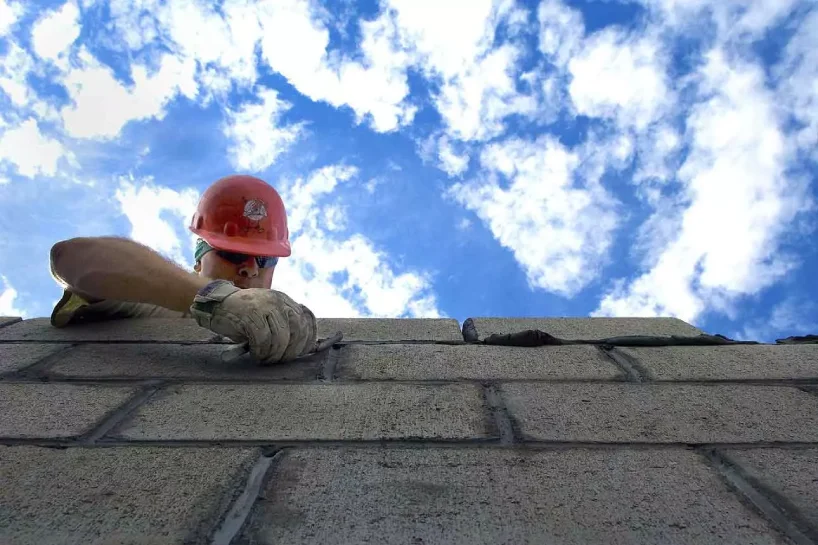
Every Saudi summer, the middle of the construction day disappears. From the height of June through to mid-September, the Ministry of Human Resources and Social Development (MHRSD) prohibits outdoor work under direct sun during the hottest hours — and a tower crane lift is outdoor work. The operator sits in an exposed cab, the banksman and slingers stand in open ground, the load swings under the sun. When the ban window opens, lifting stops.
For a trade that can move into the shade, losing three midday hours is a nuisance. For a crane crew — a fixed, expensive resource whose output is counted in lifts per shift — it reshapes the entire working day. Plan for it and the summer becomes a predictable split-shift rhythm. Ignore it and you discover, in August, that your concrete-pour sequence no longer fits the hours you are actually allowed to lift in.
This guide covers what the ban is, why crane and hoist work falls under it, how it compresses the lifting day, and the scheduling moves — early starts, split shifts, night lifts — that protect crane uptime through a Saudi summer. It also maps how the rule differs from the UAE midday break, so a contractor running sites in both countries plans each one correctly.
What the Saudi midday work ban is
The ban is a summer heat-protection rule. In recent years it has run from 15 June to 15 September, prohibiting work in open areas under direct sun between 12:00 and 15:00. It is issued each year by MHRSD as a ministerial decision, applies Kingdom-wide — Riyadh, Jeddah, Dammam and the Eastern Province, Mecca, Medina, the Tabuk and NEOM region, Abha — and is one of the most visible features of a Saudi summer site.
Two caveats matter for planning. First, the dates and hours are set annually and can shift, so the figures above are the established recent pattern, not a permanent fixture — check the current year’s ministerial decision before you commit a summer programme. Second, the national rule is a minimum: client, municipal and Aramco-scope requirements on a given site can be stricter, and the binding window for your crew is whichever is most conservative.
Why crane and hoist lifting counts as banned work
There is sometimes a temptation to treat a crane as a machine that runs itself, exempt from a rule written for labourers. That reading does not hold. A lift is a team operation carried out in the open:
- the operator in a cab that, however well shaded, is exposed and heat-loaded through a long summer afternoon;
- the banksman / signaller standing in open ground with a clear sightline to the load;
- the riggers and slingers attaching, guiding and landing the load, often at height and fully exposed;
- the landing crew receiving material at the slab edge.
Every one of these roles is outdoor work under direct sun during the prohibited hours. The crane structure can stand idle in the heat without a problem — but you cannot run a normal lifting operation that puts people in the sun between 12:00 and 15:00 in the ban period. Construction and passenger hoists carry the same logic: the hoist can sit, but loading, banking and maintenance access during the window is exposed work.
Enforcement and why compliance protects your programme
MHRSD enforces the ban through labour inspectors who visit sites during the prohibited hours, and the ministry has run public reporting channels — including the 19911 unified number and its apps and platforms — for workers and members of the public to flag violations. Penalties are defined by the labour regulations and have historically been applied per worker, but the amounts and escalation are set by current regulation and change over time; confirm the present penalty structure with MHRSD rather than quoting a figure from an old article.
For a main contractor the immediate fine is rarely the worst outcome. A stopped site, a client-side incident report and the knock-on to a pour or steel-erection sequence cost far more than the penalty itself. Planning lifting around the ban is cheaper than planning against it.
How the ban compresses the lifting day
The ban carves roughly three of the hottest hours out of the middle of the shift. A nominal working day splits into a morning block before noon and an afternoon block after 15:00, with the crane idle in between. The arithmetic is unforgiving for lifting because, unlike trades that simply pause, a crane crew is a fixed cost whose value is realised only while it is lifting.
| Day phase | Typical window | Lifting status | Planning priority |
|---|---|---|---|
| Early morning | First light to ~09:00 | Coolest, best conditions | Critical, long-radius and personnel lifts |
| Late morning | ~09:00 to 12:00 | Productive, rising heat | Heavy pours, steel sequences |
| Midday ban | 12:00 to 15:00 | No exposed lifting | Maintenance prep, planning, indoor tasks |
| Afternoon | 15:00 to dusk | Resumes, still hot | Continuation lifts, lighter work |
| Night (if used) | After dusk | Permitted with controls | Catch-up and tight-airspace lifts |
The honest read is that you lose the midday block outright, and the post-15:00 restart carries re-briefing and setup overhead. The teams that cope best treat the afternoon as a continuation of a plan laid out in the morning, not a fresh start.
Split shifts and early starts to protect uptime
The standard response across the Gulf is the split shift: an early-morning block, the midday stand-down, and an afternoon-into-evening block. For crane work specifically, a few moves protect uptime:
- Front-load the critical path. Schedule the lifts that gate the programme — concrete-pour feeds, primary steel, precast panels — into the cool early morning when both the crew and the equipment perform best.
- Use the midday window for non-exposed work. Method-statement review, lift planning, rigging prep under cover, and maintenance access that does not put a worker in the sun can all happen during the stand-down so the afternoon restart is quick.
- Brief once, for both blocks. A single morning toolbox talk covering the whole day’s lift schedule, including the afternoon, removes the restart drag.
- Keep the operator rotation honest. Heat fatigue is cumulative; a split shift that quietly extends total exposed hours defeats the purpose.
This is also where the ban meets the commercial model. A crane on hire is charged for the period it is mobilised, not the hours it actually lifts, so a compressed day raises the effective cost per lift. We break that down in the Saudi tower crane rental cost guide, which treats the midday ban, 15% VAT and labour loading as explicit SAR cost drivers rather than line items to discover later. For the GCC currency-and-market contrast, the Dubai rental and operator cost breakdown sets out the UAE side of the same arithmetic.
Night lifts — when they make sense and what they cost
Shifting work into the cooler evening is the obvious way to claw back hours, and night lifting is common on Saudi sites in summer — especially on giga-project and super-tall programmes where the schedule simply cannot absorb a three-hour daily hole. It is not a free pass, though. Night lifting needs its own controls:
- Lighting designed for the lift, covering the full radius and the landing zone, not just general site floodlighting.
- Additional supervision and a fresh risk assessment, because reduced visibility and operator fatigue change the hazard picture.
- Neighbour and municipal considerations in urban areas like Riyadh and Jeddah — noise and permitted working hours can restrict night work.
- Competence still applies. Night does not relax operator and rigger requirements; if anything the bar is higher. See the Saudi crane operator licensing and competence guide for how MHRSD-recognised training and the Aramco overlay frame who is allowed to run the lift, day or night.
Treat night lifting as a planned mode with its own method statement, not as the day shift moved later, and confirm permitted hours with the site authority and any client or Aramco-scope restriction.
Heat and sandstorm limits that compound the ban
The midday ban is a labour rule, not an equipment rule — but Saudi summer also brings operating conditions that stop lifting on their own, and the two interact. Saudi summer temperatures routinely exceed 45°C, which stresses motor cooling, hydraulic fluids and electrical cabinets, and the NW shamal pattern that drives Gulf summer wind also lifts dust that can drop visibility below safe lifting limits in minutes.
The wind and dust thresholds — when to stop lifting, when to stow, and why the slew brake is released during a storm — carry directly across from the UAE. Our tower crane wind-speed and shamal-storm procedures guide sets out the in-service, stop-work and storm-survival thresholds; the same physics applies on a Riyadh or Dammam site. The planning point is that the heat ban, a high-wind stop and a dust-visibility stop can stack — and a summer programme that assumed full daylight lifting hours will not survive contact with all three.
Building the ban into the lift plan from day one
The contractors who run summer well treat the ban as a fixed input to the programme, not a surprise:
- Bake the compressed day into the baseline schedule. Plan summer pour and erection sequences against the hours you can actually lift, not a nominal full day.
- Sequence climbing operations around the cool hours. A tower-crane climb is the most exposed operation in the crane’s life and is tightly wind- and time-limited; in summer it also has to land inside the permitted hours. The principles in our internal vs external climbing tower cranes guide on planning a climb window apply, with the heat ban as an added constraint on when that window can open.
- Reflect the ban in the rental model. A compressed lifting day changes the cost per productive hour; price it in.
- Hold the wider compliance picture together. Operator competence, inspection cycles and lift planning do not pause for summer. The UAE tower crane operations and compliance guide shows how those threads tie into a single operational picture; the Saudi framework runs on its own regulators, but the discipline is the same.
How the Saudi ban differs from the UAE midday break
Both countries run a summer heat rule with the same intent, but they are separate regulations from different ministries, with their own dates, hours and enforcement. Saudi Arabia’s ban comes from MHRSD; the UAE’s midday break is issued by its own labour ministry on its own published window. The dates and prohibited hours have not always lined up between the two, so a contractor running, say, a Dubai tower and a Riyadh tower in the same season cannot assume one shift pattern covers both sites. Plan each against its own jurisdiction’s current-year decision.
This is one thread in a wider GCC pattern: the heaviest Saudi lifting demand sits on Vision 2030 programmes, and the tower cranes and hoists for Saudi giga-projects guide covers how megastructure-scale work — which has to absorb the midday ban across a long build — shapes equipment selection. None of this changes the core rule: for three hours in the middle of a Saudi summer day, the lift stops.
How HOE plans around the Saudi summer
HOE supplies and services tower cranes and construction hoists across the GCC, including as a tower crane supplier in Saudi Arabia, shipping from our Dubai depot into Riyadh, Jeddah, Dammam and remote sites. We do not run a Saudi yard — we compete on multi-brand choice, genuine OEM parts depth and cross-border engineering know-how — but the summer planning logic is built into how we mobilise and support equipment in the Kingdom:
- Erection and climbing windows are scheduled around the cool hours and the permitted lifting day, with the climb landing inside both the wind and the heat-ban constraints.
- Maintenance and inspection visits are planned to use the midday stand-down where the work is non-exposed, so the crane is ready to lift the moment the afternoon block opens.
- 24/7 breakdown cover runs regardless of season — summer heat is hard on motors, brakes and electrical cabinets, and a breakdown does not wait for the cool of the morning.
To plan a summer lifting programme or mobilise equipment into a Saudi site, talk
to the sales team on +971 50 144 4810 or through our
services page. For breakdowns during the season, the 24/7 line is
+971 50 641 5819, or email inquiry1@hoe.ae. When you are ready for a
configuration-specific recommendation,
request a quote through our contact page with your site location,
crane or hoist requirement and programme dates, and we will build the summer
constraints into the answer.
The midday ban is a fixed feature of building in Saudi Arabia. Plan the lifting day around it and a Saudi summer runs on a predictable split-shift rhythm. The FAQs below cover the current-year dates, night-lift rules and the UAE comparison in more detail.
People Also Ask
Frequently Asked
What are the Saudi summer midday work-ban hours and dates?
Can tower cranes operate during the Saudi midday work ban?
How does the midday work ban affect crane lift scheduling and productivity?
How is the Saudi midday work ban enforced and reported?
How does the Saudi midday ban differ from the UAE midday break?
Are night-time crane lifts allowed in Saudi Arabia in summer?
Need this on a real site?