

GJJ & ORBIT Construction Hoist Spare Parts: Motor, Pinion, Rack, Rollers & SAJ Device (UAE)
GJJ and ORBIT hoists share the SC200/200 rack-and-pinion platform, so most wear parts cross over. The hoist motor, pinion, rack, rollers and SAJ anti-fall device — what fails, how to spec it, UAE stock.
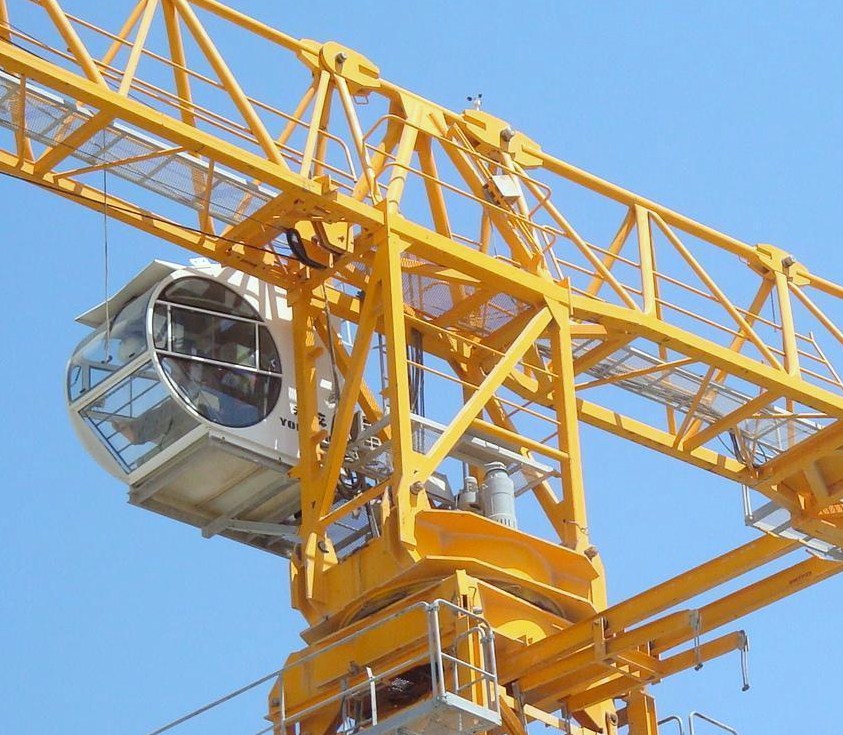
A construction hoist on a Dubai high-rise cycles harder than almost anything else on the site. A tower crane might make thirty lifts a shift; a passenger-and-material hoist can run eighty round trips a day, every day, in 50°C heat and fine airborne dust. That duty cycle is exactly why hoist parts wear out on a schedule you can plan for — and why the wrong part, or no part in stock, stops every trade above ground until it arrives.
This guide is the parts-sourcing companion to our hoist buyer content. It assumes you already own or run a GJJ or ORBIT rack-and-pinion hoist and you need to identify, spec and source the parts that keep it climbing: the drive motor, the pinion-and-rack wear pair, the guide rollers, the limit switches and cage-door hardware, and the SAJ anti-fall device. If you are still choosing between configurations, start with the construction hoists UAE buyer’s guide instead; if you are weighing two specific machines, the GJJ SC200 vs ORBIT OTH twin-cage comparison covers that.
One boundary up front. This page is about part identification, selection and sourcing. The anti-fall device’s working theory, its load-drop test and the regulatory background live in our dedicated SAJ40 / SAJ60 anti-fall device guide — we link across to it rather than repeat it. The eight FAQs below cover the quick questions; the body covers the parts, family by family.
Construction hoists in the UAE: GJJ and ORBIT on the SC200/200 platform
On UAE high-rise sites a “construction hoist” or “site hoist” almost always means a rack-and-pinion mast-climbing hoist — a cage that drives itself up a bolted steel mast on meshing teeth, climbing with the building. GJJ and ORBIT are the two Chinese OEM brands HOE sees most often across Dubai, Abu Dhabi and Sharjah, alongside the occasional Alimak on a European-spec joint venture.
Both GJJ and ORBIT build on variations of the SC200/200 platform — the SC designation covers the single and twin-cage passenger-and-material family that dominates the regional market. GJJ runs the broader range (SC100 material-only up to the heavier SCD series), and the GJJ SC200/200 twin-cage is the workhorse on Dubai high-rise. ORBIT’s OTH single-cage units sit on the same mechanical architecture. Because the platform is shared, the parts conversation for the two brands is largely one conversation — which is the whole point of this page.
Whether you run a single or twin-cage unit changes how many of these wear parts you carry, not which parts they are — a twin-cage hoist simply doubles the drive-side count. If that single-versus-twin decision is still open on your project, the twin-cage vs single-cage hoist economics for UAE high-rise breaks down the throughput and cost trade-off; here we assume the machine is already on site and focus on keeping it running.
Why GJJ and ORBIT wear parts are largely cross-compatible
The SC200/200 platform standardised the things that matter for parts: a modular mast section with a bolted rack, a drive unit with one or more motor-and-pinion assemblies, a guide-roller cage that clamps the unit to the mast, and a progressive-type anti-fall governor on the pinion shaft. Because GJJ and ORBIT both build to that architecture, the high-wear items — pinion, rack, rollers, brake parts — are closely related across the two brands.
“Closely related” is not “identical,” and on a lifting machine the difference matters. Tooth count on a pinion, the module and pitch of a rack, roller diameter, motor frame and mounting PCD all have to match before a part is the right part. The disciplined approach is the one in our genuine OEM vs aftermarket tower crane parts framework: confirm the spec against the data plate and the parts schedule, never against a brand label on a box. Send the serial and a photo and we verify the fit before anything ships — that single step prevents the most common and most expensive sourcing mistake.
The rack-and-pinion wear pair: the top mechanical failure
If you only stock one spare for a long deployment, make it the drive pinion and gear rack. This is the pair that carries every cage cycle, and in UAE conditions it wears faster than the manuals — written for temperate climates — suggest. Fine Shamal-season dust settles into the tooth mesh and acts as a grinding paste; the lubricant that should protect the teeth instead holds the abrasive against them. The result is accelerated tooth wear, growing backlash, a characteristic climbing whine, and eventually chipped or cracked teeth.
A few rules that hold across both brands:
- Replace pinion and rack as a matched set. A new pinion meshing into a worn rack (or the reverse) concentrates load on a few teeth and fails early.
- Watch backlash, not just appearance. Measurable backlash growth is the leading indicator; visible chipping is already late.
- Keep them lubricated to schedule and clean the mesh of dust build-up — this is the single biggest lever on rack-and-pinion life in the Gulf.
Pinions and racks are the parts most worth holding on site for a tall, long-duration build, because a worn pinion that lets go mid-shift is a same-day emergency. If you are already in that situation, our guide to emergency hoist and crane part sourcing from Dubai stock walks through exactly what to photograph and what the breakdown line needs.
Hoist drive motor, integral brake and reducer
The drive motor is the highest-downtime electrical part on the hoist — when it seizes or the brake fails to hold, the cage stops and stays stopped. On the SC200/200 platform the motor is typically a three-phase unit with an integral fail-safe brake (spring-applied, electrically released) and an in-line reducer driving the pinion shaft. Twin-cage hoists carry a motor-and-pinion set per drive position.
Three points govern sourcing the right unit:
| Spec to confirm | Why it matters |
|---|---|
| Power rating (kW) and speed | Determines cage rated speed; a mismatched motor changes the duty cycle |
| Voltage and frequency | UAE runs 3-phase 400 V / 50 Hz — verify your site supply, as parts of KSA run 60 Hz |
| Brake torque and type | The brake is a safety element, not a convenience; it must match the rated load |
| Reducer ratio and mounting | Sets pinion speed and must bolt to the existing drive frame |
The brake stack and motor are often ordered as separate items, so a “motor replacement” can mean motor, brake, or both. The motor-identification logic — reading the nameplate for kW, poles, voltage, frequency, frame and brake torque, and dodging the 50 Hz / 60 Hz cross-border trap — is the same discipline we set out for crane drives in the tower crane hoist and slewing motor replacement guide. Read the nameplate, photograph it, and let us confirm the SKU rather than ordering on the model name alone.
Guide rollers, limit switches, anemometer and cage-door parts
Below the headline items sits a layer of parts that are individually cheap and collectively responsible for most “nuisance” stoppages:
- Guide rollers clamp the drive unit to the mast and take the horizontal reaction load. They wear, develop flats, and introduce play that loads the pinion unevenly. Replace in sets and check roller bearings at the same time.
- Limit switches — top, bottom, final, and door interlocks — are safety-critical and a common failure point in dusty, vibrating service. A failed final limit will, correctly, refuse to let the cage run.
- The anemometer on the cage roof feeds the wind cut-out; UAE Shamal gusts make it a part worth keeping serviceable, not bypassing.
- Cage-door hardware — interlocks, rollers, latches and the landing-gate mechanics — takes constant abuse from crews and is a frequent re-order.
None of these should be substituted casually. Door interlocks and limit switches are part of the machine’s safety chain, and a genuine OEM part with documentation is the only defensible choice — the reasoning is in our genuine OEM vs aftermarket framework. If you are buying from an unfamiliar source, the delivery-day checks in our how to verify a genuine crane part checklist apply to hoist parts exactly as they do to crane parts.
The SAJ anti-fall device: matching the model to your cage
Every rack-and-pinion hoist carries a SAJ progressive-type anti-fall governor on the pinion shaft — the device that arrests the cage if it overspeeds in descent. The family runs SAJ20, SAJ30, SAJ40, SAJ50 and SAJ60, rated by tripping speed and the load they are certified to arrest. The correct device for your hoist is the one matched to the cage’s rated speed and rated weight, both of which are stamped on the existing device and listed on the hoist data plate.
The selection rule is simple and non-negotiable: match like-for-like to the cage rating. Do not fit a device because it is the one in the store and “close enough” — the trip speed has to match the cage it protects. Read the plate on the installed unit, confirm against the cage rating, and re-order the same model.
We keep the how it works, how it is tested and what the regulators require deliberately out of this page — that is owned by our SAJ40 / SAJ60 anti-fall device guide, which covers the governor theory, the load-drop test and the UAE compliance background. Here we are only concerned with selecting and re-ordering the right unit.
The mandatory 3-year SAJ replacement as a recurring procurement event
The point most easily missed in budgeting: the SAJ device is replaced on a hard 3-year cycle, regardless of duty hours or whether it has ever tripped. It is a sealed, time-expiring safety component — a worn or expired governor is one of the leading causes of hoist incidents globally, which is why the replacement interval is a date, not a wear threshold.
For a procurement team, that turns the SAJ device into a predictable line item: every hoist on the books carries a known replacement date, and on a multi-year megaproject the replacements stack up. Build them into the maintenance budget the same way you treat TPI recertification — planned, calendared and ordered ahead of the expiry rather than scrambled when an inspector flags it. Holding the schedule for your whole fleet in one place lets us pre-position the right SAJ models so you are never grounding a cage waiting on a safety part.
Sourcing GJJ and ORBIT parts in the UAE: Dubai stock and lead times
HOE holds GJJ and ORBIT construction hoist parts physically in Dubai — pinions and racks, guide-roller sets, drive motors and brake parts, limit switches and cage-door hardware, and the SAJ anti-fall device range — as a specialist crane and construction hoist spare parts supplier in the UAE. We supply genuine OEM sourced through authorised channels, with serial traceability on the parts where it matters, and we supply for hoists we did not originally sell.
Lead times, hedged honestly:
| Scenario | Realistic timeline |
|---|---|
| In-stock part, UAE site | Same-day dispatch on confirmed orders; typically on a flatbed within 4–8 hours |
| In-stock part, wider GCC | 2–5 days door-to-door, subject to customs clearance |
| Non-stocked / factory-direct item | Confirm current lead time at quote — routed factory-direct |
Two practical notes. On electrical parts, verify your site supply before ordering — the UAE runs 50 Hz while parts of Saudi Arabia run 60 Hz, so frequency is a cross-border check, not an assumption. And on landed cost, UAE import duty is 5% plus 5% VAT, with the relevant HS-code family typically in the 8431.49 range (electricals may fall under other headings) — confirm the classification with a customs broker rather than treating any single code as final. The sourcing-path mechanics — customs, documentation and the routes to factory-direct — are covered in full in our UAE spare-parts procurement guide, so we link there rather than repeat it.
Getting a hoist parts quote
When a cage is grounded, every hour above ground costs the project, so the fastest path to the right part is to send us enough to identify it on the first pass. For a quote or a stock check, send:
- Hoist make, model and serial number (from the data plate)
- The part you need, with a photo of the failed item and its markings
- Site location (UAE emirate or GCC city) for the delivery path
- For motors and electricals, the nameplate — kW, voltage and frequency
Reach the team on sales +971 50 144 4810 for quotes and supply, or the 24/7 breakdown line +971 50 641 5819 when a cage is down and you need a part moving today. You can also email inquiry1@hoe.ae or use the contact form. For the full range and to start a parts request, the spare-parts hub is the place to begin.
Send the data plate, get the right part — and keep the cage climbing.
People Also Ask
Frequently Asked
What spare parts do GJJ construction hoists need most?
Is the GJJ SC200 the same as the ORBIT OTH hoist?
Are GJJ and ORBIT hoist parts interchangeable?
How often must the SAJ anti-fall device be replaced?
How do I select the right SAJ model for my hoist?
What is the top wear part on a construction hoist?
Where can I buy GJJ and ORBIT hoist parts in Dubai?
Do you ship construction hoist parts across the GCC?
Need this on a real site?