

Construction Hoist vs Alimak — Why the Brand Name Confuses Buyers (And What Actually Matters)
'Alimak' is so well-known that it's used as a generic term for any construction hoist — like Kleenex for tissue. The actual brand comparison matters, especially in MENA where 70%+ of installs aren't Alimak at all.
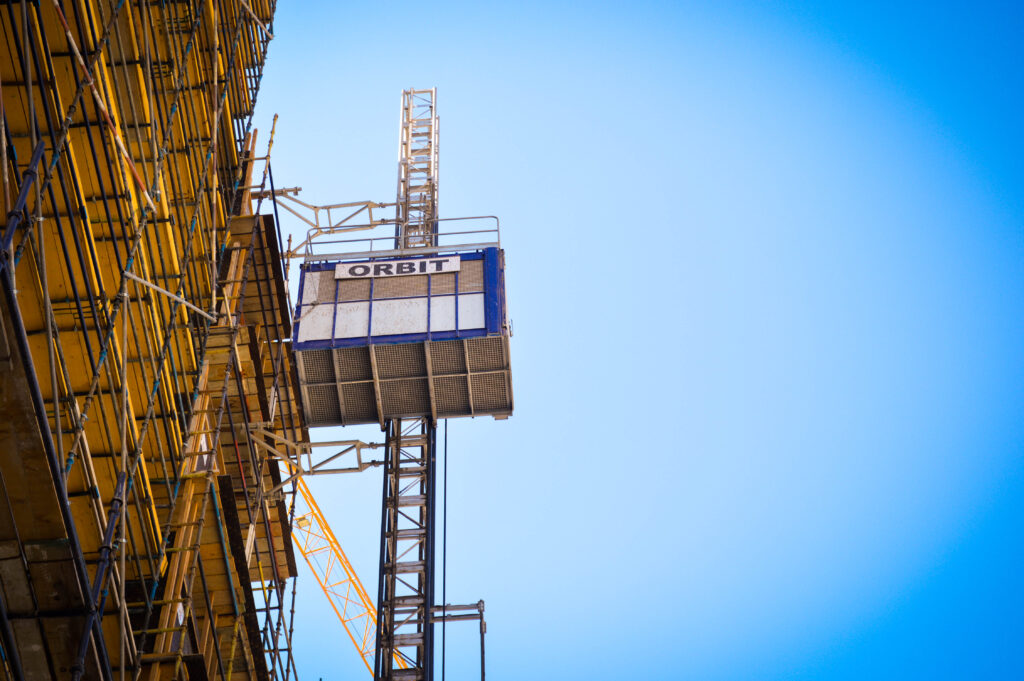
If you’ve ever been on a UAE construction site, you’ve heard someone say “we need to get the alimak fixed” or “the alimak is down” — usually about a hoist that isn’t an actual Alimak. It’s a GJJ, an ORBIT, a SAEZ, sometimes an Alimak-compatible MABER.
This is the Kleenex / Velcro / Jacuzzi problem applied to construction hoists. The Alimak brand is so dominant in the historical narrative of rack-and-pinion hoists that the word is used generically for the whole category.
For most casual on-site use, the genericism is fine — the operator who says “the alimak” knows perfectly well it’s a GJJ. The procurement consequence is real though: when a project spec says “Alimak hoist,” does it mean genuine Alimak, or any rack-and-pinion P&M hoist? And if you don’t know to ask, you might end up paying for the brand premium when an equivalent-spec alternative was acceptable.
This guide unpacks what the actual Alimak vs alternatives distinction is, when the brand premium is worth paying, and where the regional UAE / GCC procurement decisions actually land. For the broader hoist procurement framing (sizing, capacity, total cost), the UAE construction-hoist buyer’s guide is the prerequisite read.
The actual Alimak Group
Founded 1948, Skellefteå, Sweden. Originally Alimak AB; merged with Hek B.V. of the Netherlands in 2008 to form Alimak Hek; rebranded as Alimak Group in 2017. Public on the Stockholm exchange. Real engineering company, real R&D, real installed base — global ~80,000 units across construction, industrial, and permanent applications.
Their construction-hoist line revolves around the Scando 650 family (P&M, single and twin cage, 1,500-3,200 kg per cage, speeds to 96 m/min, heights to 450+ m). Adjacent lines include the TPL (transport platform for materials), SE-H (high-rise frequency-drive), and a range of industrial / permanent-installation lifts that don’t compete with construction hoists at all.
In MENA specifically, Alimak has historical presence going back to the 1980s. Their UAE distribution is established but not as widely deployed as GJJ or ORBIT — in our experience on Dubai sites, Alimak makes up perhaps 15-25% of active construction-hoist installations, with the remainder split between GJJ (~40%), ORBIT (~15-20%), and other Chinese / European OEMs.
Why “alimak” became generic
Two reasons. First, historical primacy: Alimak was the dominant hoist brand on European and MENA megaprojects for decades, including the 1980s-2000s Dubai building boom. Site crews trained on Alimak, manuals were in Swedish-translated English, parts catalogs referenced Alimak SKUs as the standard. The vocabulary stuck.
Second, the technology is genuinely Alimak’s. The modern rack-and-pinion construction hoist as a category was largely standardised by Alimak’s engineering in the 1950s-70s. Other manufacturers built to Alimak’s geometry and Alimak’s safety standards, often producing parts dimensionally identical so they could substitute on Alimak masts. The word came to mean the category, the way “Xerox” came to mean any photocopier.
It’s not a problem until it becomes one — i.e., until the procurement spec needs to distinguish between “Alimak brand specifically” and “Alimak-category hoist generally.”
What’s actually different about a real Alimak vs GJJ / ORBIT
In our hands-on experience erecting, servicing, and supplying parts for all three:
Things genuinely different in the Alimak
- Cab finish. The Scando 650 cab interior is noticeably more polished than the GJJ / ORBIT equivalents. Better lighting, smoother controls, less industrial-utilitarian feel. Matters on residential / hospitality late-stage commissioning where handover staff use the hoist for snag teams and FM walk-throughs.
- Long-term durability. Alimak units routinely run past 15 years with proper maintenance. We’ve serviced Scando 550 units in Dubai installed in the early 2000s still operating reliably. GJJ / ORBIT units typically have a 10-12 year practical service life before major refurbishment is needed.
- Engineering documentation. Alimak manuals are detailed, translated competently, and cross-referenced with the spare-parts catalogue clearly. GJJ documentation is improving but historically Chinese-translated with occasional ambiguity.
- Service network depth. Alimak’s global service organisation is more standardised across regions than the Chinese OEM dealer networks. Matters more for non-MENA projects than for Dubai where HOE handles all brands from one depot.
Things essentially the same
- Safety standards. All three meet the same international standards (EN 12159, DIN 15-something, GB-T 10054 — depending on certifying jurisdiction). Same anti-fall safety device (SAJ40 / SAJ60 progressive-type centrifugal governor). Same TPI requirements.
- Lift capacity and height envelope. A 2,000 kg cage is a 2,000 kg cage; mast geometry is broadly compatible; lift heights are configuration-driven, not brand-driven.
- Operating speed. Standard motors vary, but high-spec motor options exist across all three brands at comparable performance.
Things genuinely better in GJJ / ORBIT (where Chinese OEMs win)
- Capex. 40-65% lower for equivalent capacity and speed.
- Parts availability. GJJ specifically has the deepest regional parts ecosystem in MENA outside of HOE Dubai-stocked items. Critical when something fails mid-deployment.
- Spare parts cost. Genuine Alimak parts ship ex-Sweden with European OEM pricing. GJJ / ORBIT parts are factory-direct from China at one-third to one-fifth the equivalent cost. HOE’s Dubai stock evens out the lead-time disadvantage.
- Resale value as a fraction of capex. Counter-intuitively higher for Chinese OEMs in MENA because the secondary market is dominated by them — easier to liquidate at end-of-project.
When the Alimak premium is worth paying
Three scenarios genuinely justify the 40-70% capex premium:
1. The project spec mandates “Alimak brand”
European JV partners sometimes write Alimak into the spec for global-portfolio standardisation reasons. If the contract is unambiguous, you source a real Alimak. Negotiate down to “Alimak-equivalent” if you can — most JV legal teams will accept that wording in a side letter once you explain the regional market.
2. Permanent / multi-project installation
If the hoist is expected to outlive a single project (rare but happens on industrial installations, ports, oil-and-gas sites, multi-tower estates where a single hoist serves multiple sequential construction phases), the 15+ year durability premium of a Scando 650 amortises over a much longer revenue period. Worth the capex.
3. The polished-cab matters
Luxury hospitality and ultra-high-end residential projects where the hoist gets used during the soft-finishing and handover phase by interior design teams, FM operators, and (sometimes) clients themselves. The Alimak cabin feels less like a construction utility and more like a working freight elevator. Marginal, but on a Burj-class project it can be a deal-breaker for a single hoist.
For everything else — which is 80-90% of UAE construction hoist deployments — GJJ or ORBIT does the same engineering job at half the cost.
When GJJ / ORBIT wins
The default UAE / GCC choice for the high-rise residential, commercial, mid-luxury hospitality, and infrastructure market.
- High-rise residential, 25-50 floors. Pick GJJ SC200/200 (twin cage) — see our GJJ vs ORBIT comparison for the detailed model breakdown.
- Mid-rise commercial, ≤30 floors, single hoist sufficient. ORBIT OTH-2024 single cage wins on capex.
- Megaproject with multiple hoists. GJJ across the board — standardise parts and crew training.
- Hospitality / luxury residential where polish matters but cost still matters. ORBIT OTH — noticeably more polished than GJJ at the residential price point.
Spare parts and service — the lifecycle reality
Whichever brand you pick, the parts-and-service economics are the bigger procurement question than the capex.
For genuine Alimak units in MENA
- Anti-fall safety devices: AED 18-28k each, 4-6 week lead from Sweden, mandatory replacement every 3 years
- Motor and gearbox replacement: AED 35-65k, 4-8 week lead
- Cabin door assembly: AED 12-22k, 3-5 week lead
- Controllers (FC-HE drive): AED 60-90k, 6-10 week lead
HOE supplies Alimak-compatible third-party parts for non-structural items (anti-fall, guide rollers, cabin doors) at 40-70% of genuine-Alimak prices, in Dubai stock. Quality varies — we only stock manufacturers we’ve inspected and trust. For structural items (mast sections, drive housings) we recommend sourcing genuine Alimak via the official channel.
For GJJ / ORBIT units
- Anti-fall safety devices: AED 4-8k each, Dubai stock, same-day UAE dispatch
- Motor / gearbox replacement: AED 12-22k, Dubai stock
- Cabin door assembly: AED 4-8k, Dubai stock
- Controllers: AED 18-32k, Dubai stock or 1-3 week lead
The parts cost differential over a 24-month deployment is significant — typically AED 50-120k saved on a GJJ vs an equivalent Alimak. Add it to the capex savings and the lifecycle math becomes definitive for most UAE projects.
See our UAE spare-parts buyer’s guide for the broader procurement playbook — same principles apply to hoist parts as to tower crane parts (Dubai-stocked beats OEM-direct on response time; OEM-direct can win on bulk for planned overhauls).
How HOE handles the mixed-brand reality
We are agnostic on brand at the procurement stage. The right hoist for your project is the one that fits the lift envelope, the deployment duration, and the budget — not the one with the strongest brand recognition.
For new sales: GJJ and ORBIT in Dubai stock, Alimak on request, MABER / SAEZ / FAR sourced on lead. For existing units: full service, parts, maintenance, climbing extensions, dismantle — whatever the brand, our engineers know it. The 24/7 breakdown line (+971 50 641 5819) handles all brands.
Getting started
Send the project parameters to the contact form or sales +971 50 144 4810:
- Building height (m), floor count
- Peak headcount (workers per peak shift)
- Project duration (months)
- Site location
- Brand preference (if any) — and whether the spec mandates Alimak or just “Alimak-type”
48-hour turnaround on the quote with model recommendation, availability from Dubai stock, and full lifecycle cost projection so the brand decision is informed by the numbers, not the noise.
The full hub of HOE hoist resources at /hoists. For the brand comparison applied to tower cranes (similar dynamics — European premium brands vs Chinese OEMs), see our tower-crane brands comparison.
People Also Ask
Frequently Asked
Is 'Alimak' a brand or a generic term for any construction hoist?
Is the real Alimak actually better than a GJJ or ORBIT?
How much more does a real Alimak cost?
Can I get Alimak parts in the UAE?
If we already have an Alimak from a previous project, should we keep using it?
What about Alimak Scando 650 specifically — that's the model people mention most?
If the project specifies 'Alimak' in the contract, do I have to source a real Alimak?
Need this on a real site?