

Yongmao Tower Crane Spare Parts: STT & STL Series Support in the GCC
Yongmao is the brand HOE knows best — the STT293 flagship and the wider STT/STL families. The wear parts that fail first, how to spec them from the data plate, and same-week GCC parts support.
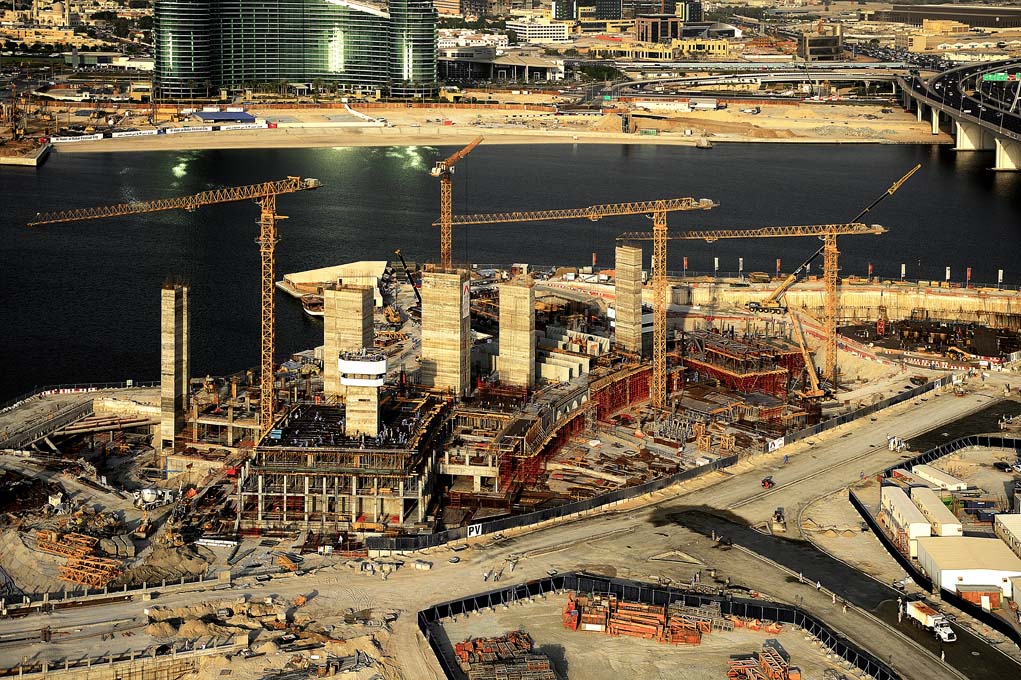
Yongmao is the brand HOE knows best. Across two decades of supply, erection and breakdown work in the Gulf, the topless STT cranes — and the STT293 in particular — have passed through our yard more than any other tower-crane line. When one of them stops mid-shift on a Dubai high-rise, we have usually replaced the failed part before, often from a shelf in the Dubai depot.
This is a parts identification and sourcing guide, not a maintenance manual. The aim is to help you name the right Yongmao part, spec it correctly off the data plate, and get it to site fast — whether that site is in Dubai, Riyadh, Doha or Muscat. For the deeper service detail we link out: slew-ring greasing and wear limits, wire-rope inspection, and the anti-collision law each have their own dedicated guides, and we point to them rather than repeat them here.
If you have not bought tower-crane parts in the UAE before, read the tower crane spare parts procurement guide first — it covers the three sourcing paths, customs, HS codes and landed-cost mechanics that apply to every brand. This page picks up from there and goes Yongmao-specific.
Why Yongmao parts are HOE’s home turf in the GCC
Yongmao is a Singapore-listed, China-built tower-crane manufacturer whose flat-top cranes have become a default choice on GCC high-rise and infrastructure work — strong load charts, a sensible price point, and a parts ecosystem that is well understood by the contractors and suppliers who run them. In the UAE specifically, the STT293 has been a workhorse on the kind of 16-tonne-class high-rise lift that defines Dubai’s skyline.
That installed base is the reason this is our home turf. When you have erected, climbed, serviced and dismantled the same crane families repeatedly, you stop guessing at parts. You know which reducer goes with which slew ring, which brake stack pairs with which hoist motor, and which electrical components give up first in a 50°C summer. For a head-to-head on where the STT293 sits against its closest European rival, see the Yongmao STT293 vs Potain MCT 385 comparison; for the wider procurement-side view of all the major brands, the tower crane brand comparison sets out how Yongmao stacks up against Potain, Zoomlion and XCMG on availability and cost.
The series that matter: STT topless, STL luffing, ST saddle-jib
Yongmao parts break down by series before they break down by part. Get the series right and the rest of the spec follows.
| Series | Type | Typical UAE/GCC role | Parts character |
|---|---|---|---|
| STT | Topless (flat-top) | Villa, mid-rise, high-rise — the GCC default | Highest-volume parts demand; STT293 the flagship |
| STL | Luffing jib | Tight Downtown / Marina sites, multi-crane airspace | Luffing-specific reeving, jib-pivot and winch parts |
| ST | Saddle-jib (older) | Long-running and legacy projects | Lower volume; some long-lead items |
The STT topless line is where most GCC parts demand sits — STT133 and STT153 on lighter work, the STT293 on high-rise, and the larger STT423 on heavy-lift. Topless cranes share a clean mechanical layout: no cat-head or A-frame, the slewing ring and machinery deck carry the loads, which makes the slew ring, reducer and motor families the ones to know.
The STL luffing series is a different animal. A luffing jib pivots up and down at the slewing platform, so it carries luffing-winch, reeving and jib-pivot parts the topless cranes do not have. On the dense plots in Downtown Dubai and Dubai Marina where airspace conflicts rule out a fixed horizontal jib, the STL earns its place — and its parts list is correspondingly more specialised. If you are still choosing between the two jib types for a site, the hammerhead vs luffing-jib guide covers the selection logic; this page assumes you already run the crane and need to keep it running.
Note on naming: we name only the Yongmao series and sizes we are confident are real and current. Where we are not certain of an exact suffix, we describe the family generically rather than invent a code — and you should be wary of any supplier who quotes a part against a model designation that does not match your data plate.
Yongmao spare families in Dubai stock
The Dubai depot is organised around the parts that come off working Yongmao cranes and need replacing fast. Five families cover the bulk of demand:
- Slewing rings — the large-diameter bearing that lets the crane rotate. A common, high-consequence wear item; we hold common Yongmao sizes locally because a seized ring stops the crane dead.
- Reducers / gearboxes — slew, hoist and trolley reducers, matched by ratio and mounting to the specific crane.
- Motors — hoist, slew and trolley motors with their integral brake stacks. The hoist motor is the single highest-downtime electromechanical part; see the dedicated tower crane hoist and slewing motor replacement guide for how to read the nameplate and avoid the frequency-mismatch trap.
- Brakes and limit switches — brake linings and assemblies, plus hoist, trolley and slew limit switches that protect the motion envelope.
- Mast sections and structural steel — the tower itself, plus tie collars, fixing angles and anchor frames. These are genuine-OEM-only, always. For the sizing and grade logic behind Yongmao mast selection, the L46A1 vs L68B mast-section sizing guide is the reference.
Wire rope and slew-ring greasing are service items with their own dedicated guides — we stock the rope and the consumables, but the inspection and replacement procedure lives in the wire-rope inspection and replacement guide, and slew-ring lubrication and wear-limit checks live in the slewing-gear and slew-ring maintenance guide. We supply the part; those guides tell you how to look after it.
The parts that fail first on Yongmao cranes in UAE heat and dust
The Gulf operating environment changes the failure order. A crane spec’d for a European climate behaves differently when the cabinet interior sits above 50°C for months and fine sand finds every seal. In rough order of how often we see them on Yongmao cranes here:
- Electrical components — VFDs/inverters, contactors and control gear run hot and fail first. Cabinet cooling and dust ingress are the usual culprits.
- Brake linings — heat and duty cycle wear the hoist-motor brake stack faster than the nameplate hours suggest.
- Limit switches — exposed, vibration-loaded, and dust-prone.
- Slewing-ring and reducer wear — slower, but high-consequence; greasing discipline (covered in the maintenance guide above) is what stretches the interval.
- Wire rope — a planned-replacement item; UV, abrasion and bending fatigue all run faster here.
The practical takeaway: stock or pre-identify the electrical and braking consumables before the Shamal season, not after the crane stops. The electrical side is involved enough that it has its own detail — VFD parameter sets, LMI retrofits and DXZ limit-switch ratios are a specialism in themselves, and a physical drop-in rarely just works. We keep that boundary clean and route the electrical specifics to the dedicated guide rather than half-cover them here.
Reading the Yongmao data plate to spec the right SKU
The single most expensive parts mistake is ordering by description — “a slew motor for our Yongmao” — instead of by SKU. The part arrives, does not fit, and now you have paid for the wrong part and are still waiting on the right one. The fix is the same discipline we apply to every brand, in order of authority:
- Crane model + serial number from the OEM data plate, bolted to the slewing platform and accessible from the cab. This is the canonical reference. Photograph it.
- Part designation from the OEM parts catalogue for that exact model and serial.
- For wear parts, the component nameplate — motor kW, poles/speed, voltage, frequency, frame size and brake torque; reducer ratio and mounting; slewing-ring outer diameter, bolt pattern and tooth count. Match these exactly.
- For structural parts — confirm the mast designation and grade explicitly, and demand the material certificate and serial stamping at delivery. Never accept a bare “L68B” with no grade.
A shortcut that works for most common Yongmao cranes: photograph the failed part with a ruler in frame, plus the crane data plate, and send both to us. HOE engineers can identify the OEM SKU from good photos in the large majority of cases — that photo-to-SKU service is free with any RFQ. The procurement guide covers the full compatibility-check logic if you want the brand-agnostic version.
STT293-specific parts: the flagship MENA high-rise model
The STT293 deserves its own note because it is the Yongmao we field the most questions on. As a 16-tonne-class topless crane, it sits squarely in the high-rise sweet spot, which means high duty cycles and a predictable wear pattern.
The parts that come up most on STT293s in the region:
- Slew ring and slew reducer — high duty cycle, high consequence; the families we most want in local stock.
- Hoist motor and brake stack — the highest-downtime electromechanical assembly; the brake linings are a recurring consumable in Gulf heat.
- Trolley and slew motors — lower individual downtime, but worth pre-identifying.
- Electrical cabinet — VFD, contactors and control gear, the first-to-fail group in summer.
- Limit switches and wire rope — service items on a planned cadence.
Because the STT293 competes directly with the Potain MCT 385 on UAE high-rise tenders, owners often run mixed fleets and need a parts partner who covers both. We do — the companion Potain MCT, MDT and MR spare-parts guide is the Potain-side equivalent of this page, and the STT293 vs MCT 385 comparison explains why the two end up side by side on the same project.
Lead times and GCC delivery: Dubai stock vs factory-direct
Lead time is the whole reason a Dubai-stocked supplier exists. For a 16-tonne-class crane, downtime runs roughly AED 4,000–12,000 per operating day once you fold in operator standby and the cascade into other trades waiting on the crane. That number is why we eat the inventory cost on the high-frequency families.
| Sourcing path | In-stock items | Long-tail / sourced items |
|---|---|---|
| Dubai depot stock | Same-day dispatch within the UAE, subject to order confirmation | n/a |
| Across the GCC from Dubai | 2–5 days door-to-door | 2–5 days door-to-door once in hand |
| Factory-direct via authorised channels | n/a | Typically a few weeks; confirm current lead time per part |
We hedge these figures deliberately. The honest answer for any specific part is “confirm current lead time when you send the model and serial” — stock turns over, and a slewing ring for one STT size may be ex-stock while another is on a regional lead. What does not change: in-stock items move same-day within the UAE, and the GCC corridor from Dubai is days, not weeks.
Two cross-border notes for GCC orders. First, electrical frequency — the UAE and most of the GCC run 3-phase 400 V / 50 Hz, but parts of Saudi Arabia run 60 Hz, so verify your site supply before ordering motors, VFDs or control gear; a wrong-frequency drive will not run the crane correctly. Second, customs — UAE import duty is 5% plus 5% VAT, and most tower-crane parts fall in the 8431.49 HS-code family, though electricals may sit under 8504 or 8537; confirm the classification and any GCC re-export documentation with a customs broker. The procurement guide has the full customs and landed-cost detail.
Request a Yongmao parts quote: what to send us
Three pieces of information get you a fixed-price quote and a confirmed lead time:
- Crane make, model and serial number — a photo of the data plate is ideal.
- The part — OEM designation if you have it, or photos of the failed part with a ruler in frame and the relevant nameplate.
- Site location and target date — so we can quote dispatch realistically, in the UAE or across the GCC.
Send those to the sales line on +971 50 144 4810 or through the contact form, and we will come back with availability, lead time and a fixed quote. Email works too — inquiry1@hoe.ae. If a Yongmao crane is down right now, skip the quote queue and call the 24/7 breakdown line on +971 50 641 5819 — that team can start part identification from your photos immediately.
For everything beyond Yongmao, HOE is a tower crane spare parts supplier for the whole UAE and GCC market: the same Dubai depot, dispatch crew and engineering team support Potain, Zoomlion, XCMG and SYM tower cranes and GJJ and ORBIT construction hoists. The Zoomlion and XCMG spare-parts guide is the companion page for those Chinese-OEM flat-tops. Whatever the badge on the crane, the discipline is the same — identify off the data plate, source genuine OEM through authorised channels, and get it to site before downtime eats the saving.
People Also Ask
Frequently Asked
Which Yongmao models are most common in the UAE and the GCC?
Where can I buy genuine Yongmao tower crane parts in Dubai?
What are the most common replacement parts on a Yongmao STT293?
How do I identify the correct Yongmao part number?
Are Yongmao and SYM parts interchangeable?
What is the lead time for a Yongmao slewing ring in the UAE?
Do you ship Yongmao parts to Riyadh, Doha and Muscat?
Should Yongmao parts be genuine OEM or is aftermarket acceptable?
Need this on a real site?